In order to conceal their defeat in the face of science, materialists always set various propaganda methods in motion. Foremost among these is the claim of a "conflict between science and religion", which has become a main theme of the materialist press. Sources that voice this claim tell stories divorced from the truth, such as that religion has opposed science throughout history and that science can develop only when religion is abandoned.
In fact, a brief look at the history of science is enough to see that all these claims are false.
If we look at the history of Islam, we see that science entered the Middle East together with the Qur'an. In the pre-Islamic period, the Arabs were a society that believed in all kinds of false beliefs and superstitions and made no observations of the universe and nature. With Islam, however, this society became civilised, came to value knowledge and, in obedience to the commands of the Qur'an, began to observe the universe and nature. Not only the Arabs, but many societies such as the Persians, the Turks and the North Africans became enlightened by accepting Islam. The perfection and knowledge that God teaches people in the Qur'an paved the way for the formation of a great civilisation, especially in the 9th and 10th centuries. A great many Muslim scholars who emerged in this period made very important discoveries in such fields of science as astronomy, mathematics, geometry and medicine.
Andalusia, which occupied a central place in the transmission of scientific activity to Europe and where many Muslim scientists were trained, was the cradle of very great innovations and advances, especially in the field of medicine. Muslim physicians did not specialise in just one field; they became specialists in a very wide range of fields, especially pharmacology, surgery, ophthalmology, obstetrics, physiology, bacteriology and hygiene. Ibn Juljul (?-992), who studied medicinal plants for many years and wrote works on the history of medicine and on medicinal plants, and the Tunisian physician Abu Jafar Ibn al-Jazzar (?-1009), who won fame in the field of diagnosis and treatment and has some thirty works that are still known today, are among the best-known scientists in the field of medicine. Abd al-Latif al-Baghdadi (1162-1231) is known for his work in the field of anatomy. He corrected errors made in the past concerning the anatomy of many bones in the body, such as the lower jaw and the breastbone. Al-Baghdadi's work entitled al-Ifada wa'l-I'tibar was revised in 1788 and translated into Latin, German and French. His work entitled Maqala fi'l-Hawass deals with the five sense organs.
Muslim anatomists also determined the correct number of bones in the human skull and that there are three small bones inside the ear. Foremost among the Muslim scientists engaged in anatomical work is Ibn Sina (Avicenna) (980-1037). Ibn Sina, who studied literature, mathematics, geometry, physics, the natural sciences and logic while still very young, became known not only in the East but also in the West. His most famous work, al-Qanun fi'l-Tibb (The Canon of Medicine), was written in Arabic and, after being translated into Latin in the 12th century, was accepted and used as the main textbook in European universities until the 17th century. In addition, he wrote more than a hundred works in the fields of philosophy and the natural sciences. A large part of the medical knowledge discussed in the Canon has not lost its importance even today.
"And mankind and beasts and livestock are likewise of varying colours. Only those of His servants with knowledge have fear of God. God is Almighty, Ever-Forgiving."
"God bears witness that there is no god but Him, as do the angels and the people of knowledge, upholding justice. There is no god but Him, the Almighty, the All-Wise."
Zakariya al-Qazwini, who lived from 1203 to 1283, did away with many mistaken ideas about the brain and the heart that had persisted since the time of Aristotle. His knowledge concerning the heart and the brain is extremely close to our knowledge today.
Zakariya al-Qazwini. The work in the field of anatomy of Hamdallah Mustawfi al-Qazwini (1281-1350) and Ibn al-Nafis laid the foundations of modern medical science. As early as the 13th and 14th centuries these scientists showed the connection between the heart and the lungs, that the arteries carry clean blood and the veins dirty blood, that the blood is cleansed in the lungs, and that the clean blood returning to the heart is conveyed by the aorta to the brain and the other organs of the body.
The first volume of Ali ibn Isa's (?-1038) three-volume work on eye diseases, Tadhkirat al-Kahhalin fi'l-Ayn wa Amradiha, is devoted entirely to the anatomy of the eye and provides a great deal of valuable information. This work was later translated into Latin and German.
Muhammad ibn Zakariya al-Razi (865-925), Burhan al-Din Nafis (?-1438), Ismail Jurjani (?-1136), Qutb al-Din al-Shirazi (1236-1310), Mansur ibn Muhammad and Abu al-Qasim al-Zahrawi are some of the Muslim scholars who hold an important place in the history of astronomy, mathematics, medicine and anatomy.
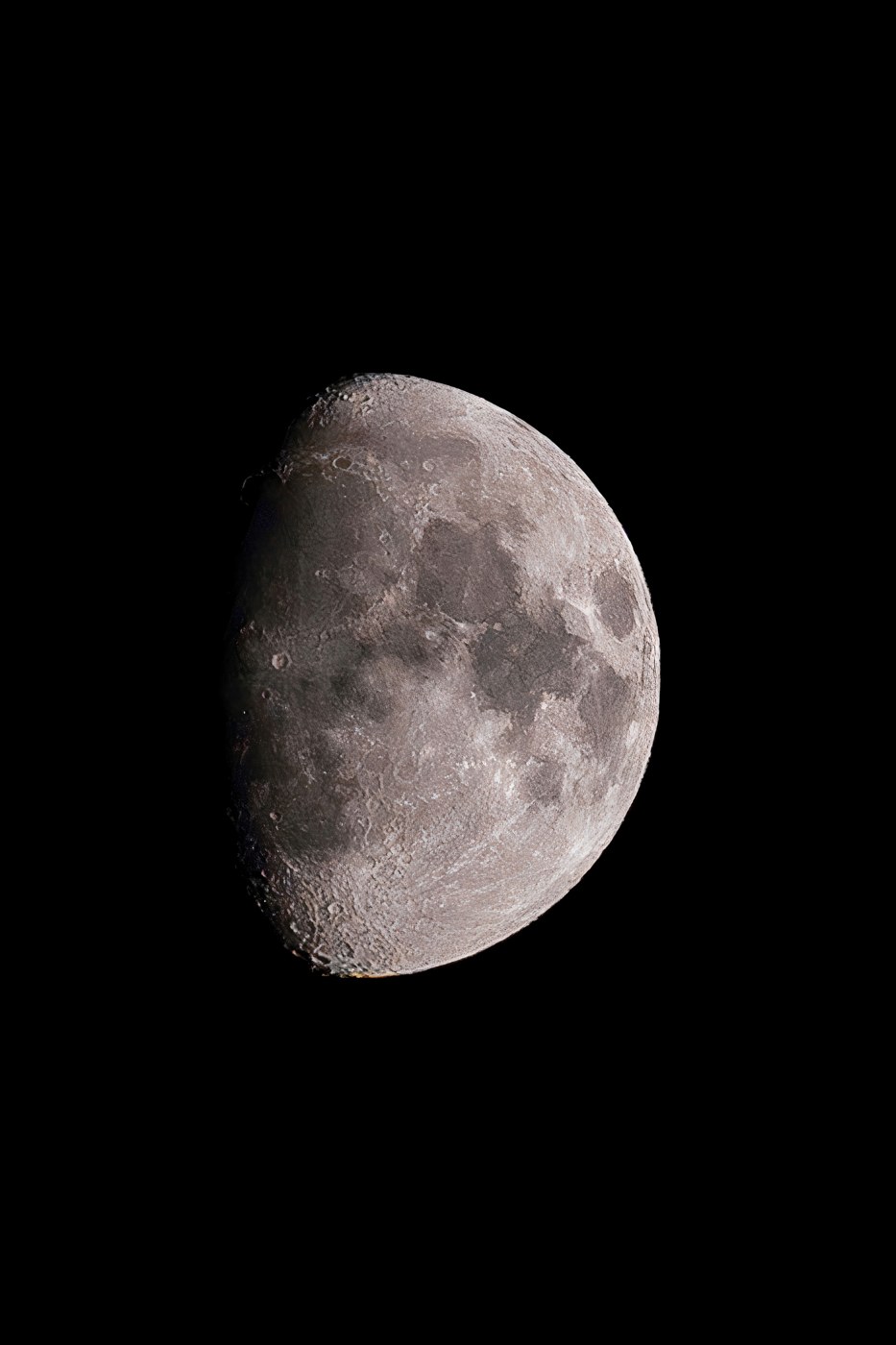
Alongside medicine and anatomy, Muslim scholars made important contributions in many other fields too. Al-Biruni, who lived in the 11th century, affirmed that the Earth rotates 600 years before Galileo, and calculated the Earth's diameter 700 years before Newton. Ali Qushji, who lived in the 15th century, drew the first map of the Moon, and today a region of the Moon bears his name. Thabit ibn Qurra lived in the 9th century and discovered differential calculus centuries before Newton. Al-Battani, who lived in the 10th century, was the first to discover trigonometry. Abu al-Wafa, who lived in the same century, introduced the terms "secant" and "cosecant" into trigonometry. Al-Khwarizmi wrote the first book of algebra in the 9th century. Al-Maghribi found the formula known today as "Pascal's triangle" 600 years before Pascal. Ibn al-Haytham, who lived in the 11th century, is the founder of the science of optics. Roger Bacon and Kepler made use of his works, and Galileo too invented the telescope by drawing on his works. Al-Kindi put forward the theory of relativity 1100 years before Einstein. Akshamsaddin, who lived about 400 years before Pasteur, was the first to discover the existence of microbes. Ali ibn Abbas lived in the 10th century and was the first to perform a cancer operation. Ibn al-Jazzar, who lived in the same period, explained the causes of leprosy and methods of treating it. As can be seen, the Muslim scholars, only a few of whose names have been listed, made important discoveries that laid the foundations of modern science.
Al-Biruni was a Muslim scientist who lived in the 11th century. He proved that the Earth moves 600 years before Galileo, and calculated the diameter of the globe 700 years before Newton.Ali Qushji drew the first map of the Moon in the 15th century; today a place on the Moon bears his name.
When we look at Western civilisation, we see that the emergence of modern science was again built upon belief in God. The 17th century, known as the "age of the Scientific Revolution", is rich in scientists who carried out research with the aim of discovering the universe and nature created by God. All the scientific institutions founded in this period in countries such as England and France had the aim of "knowing God by discovering His laws". People such as Newton, Kepler, Copernicus, Bacon, Galileo, Pascal, Boyle, Paley and Cuvier are just a few of the scientists who made important contributions to the world of science and who were at the same time known for their faith in God (for more detailed information, see the section Scientists Who Believed).
These scientists were people who believed in God and carried out scientific activity with the enthusiasm that springs from this belief. One example of this truth is the series of works organised in England at the beginning of the 19th century and known as the "Bridgewater Treatises". Many scientists carried out research in various fields of science and regarded the results they obtained as "evidence of the harmony and compatibility that God has created in the universe and in nature". The method these scientists used was expressed by the concept of "Natural Theology", meaning "knowing God through nature".
The most famous book included in the "Bridgewater Treatises" is the book entitled Natural Theology: or, Evidences of the Existence and Attributes of the Deity, Collected from the Appearances of Nature, published in 1802 by William Paley, a well-known scientist of his time. In this book Paley gave very comprehensive anatomical information and gave examples of the "designs" in the bodies of living things.
Later, drawing on Paley's work, a statement was issued in the name of the Royal Society. In the statement scientists were advised to carry out research on the following subjects:
On the Power, Wisdom and Goodness of God, as manifested in the Creation; all the evidence and rational explanations showing His creation, for example the variety and formation of God's creatures among animals, plants or minerals, the details of digestion and of the dissolving (of food), examples of "design" constructed by man, and every other kind of rational argument, the fields of ancient and modern science and art, and the whole extent of literature...
Many scientists joined this call to set out the proofs of God's existence, and very important scientific works were published one after another. The works published in the "Bridgewater Treatises" and their authors are as follows:
– The Adaptation of External Nature to the Moral and Intellectual Constitution of Man (Thomas Chalmers, 1833)
– Chemistry, Meteorology and the Function of Digestion (William Prout, M.D., 1834)
– On the History, Habits and Instincts of Animals (William Kirby, 1835)
– The Hand: Its Mechanism and Vital Endowments as Evincing Design (Charles Bell, 1837)
– Geology and Mineralogy (Dean Buckland, 1837)
– On the Adaptation of External Nature to the Physical Condition of Man (J. Kidd, M.D., 1837)
– Astronomy and General Physics (William Whewell, 1839)
– Animal and Vegetable Physiology (P. M. Roget, M.D., 1840)
The "Bridgewater Treatises" are one of a series of examples showing the harmony between religion and science. The aim of a great many other scientific works carried out before and after these works was to come to know the universe created by God and in this way to comprehend His greatness.
The turning of the world of science away from this direction is a result of materialist philosophy coming to dominate 19th-century Western civilisation as a result of a number of social and political conditions. This process was expressed most clearly in Darwin's theory of evolution, and began to portray science and religion, in complete contrast to the earlier situation, as two mutually contradictory sources of knowledge.
The British researchers Michael Baigent, Richard Leigh and Henry Lincoln explain this as follows:
"A century and a half before Darwin, science was not separate from religion; on the contrary, it was a part of it, and its ultimate aim was to serve it... But science in Darwin's time was severed from the meaning it had carried until then, and established itself as an absolute rival and an alternative to religion. Henceforth humanity would be compelled to choose between the two."40
Today, however, science, by virtue of its own discoveries, refutes this forced separation that they wanted to drive between religion and science. Religion teaches us that the universe was created from nothing, and science finds the evidence of this truth. Religion teaches us that God created living things, and science sets out the evidence of this truth through the order it discovers in the world of living things. Michael Denton says in his book Nature's Destiny that "science, which has been for centuries the great ally of atheism and skepticism, has become at last, in these final days of the second millennium, what Newton and many of its early advocates had so fervently wished – the 'defender of the anthropocentric faith'". The anthropocentric faith is the belief that God created the world for human beings.
This conclusion reached by science is causing more and more scientists to believe sincerely in God. The well-known biochemist Michael Behe expresses this fact, saying: "Many more scientists than are portrayed in popular media stories believe in a creator, or in a reality beyond nature: there's no reason to think that scientists are any different in this respect from the believers who make up 90% of the general population."42
Faced with this conclusion that science has reached, the materialists try to intimidate the world of science by setting a number of pressure mechanisms in motion.
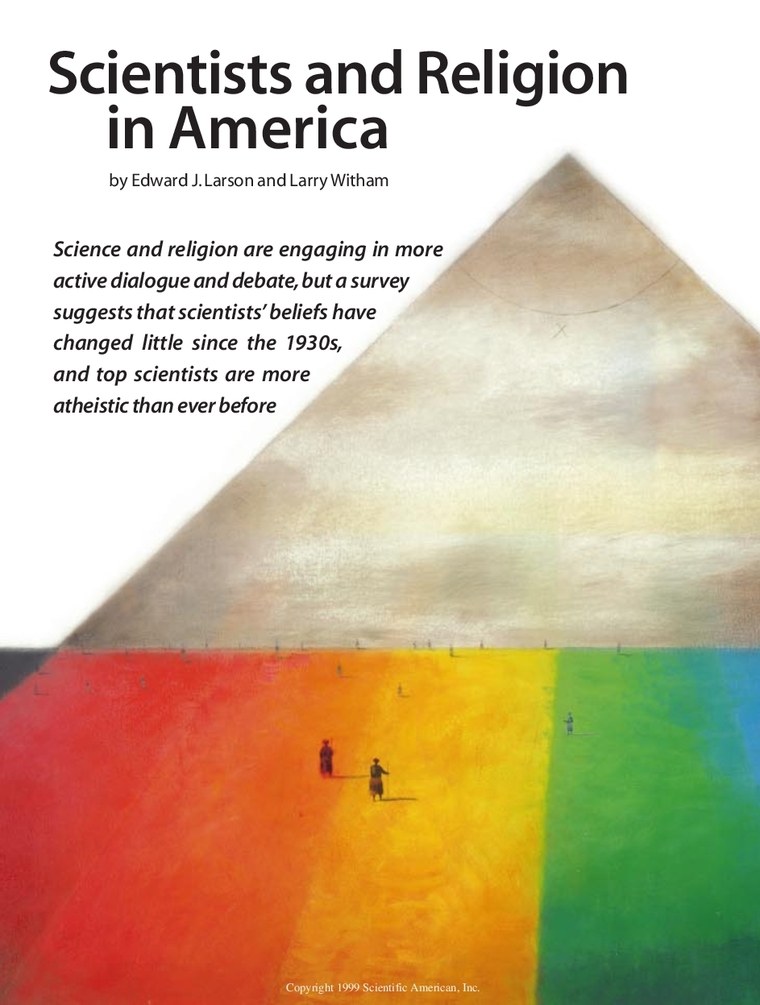
In Western countries, in order for a scientist to advance, obtain academic titles such as associate professor or professor, and publish his scientific work in scientific journals, he must comply with certain standards. Accepting the theory of evolution unconditionally is standard number one. For this reason some scientists accept Darwinist fairy tales in which they in fact do not believe at all, and disregard the evidence of creation. In the article "Scientists and Religion in America" in the September 1999 issue of the magazine Scientific American, Rodney Stark, a sociologist at the University of Washington, explained the pressure exerted on scientists as follows:
"There's been 200 years of marketing about the idea that 'if you want to be a scientific person, you've got to keep your mind free of all the fetters of religion'... In the universities, religious people keep their mouths shut and the irreligious are favoured. There's a reward system for being irreligious in the upper echelons."43
Another example of this systematic struggle that the materialists wage against religion is the propaganda methods we mentioned at the beginning. Claims such as "Religion conflicts with science" or "Science must be materialist" are the main elements of this propaganda. Let us now examine why these claims have no logical or coherent aspects.
The Attitude of the Medieval Church Towards Scientists
Circles opposed to religion frequently use the mistaken views and attitude of the medieval Church concerning science as a weapon against religion. It is said that the Church held Europe back from progress and plunged it into misery. The reason behind these efforts is to associate the medieval Church with religion and so to tell people, "if religion comes, we will be buried in the darkness of the Middle Ages". In fact, however, true religion does not consist of the views and attitude of the medieval Church.
The medieval Church had moved away from the revelation conveyed by the Prophet Jesus and put forward certain ideas foreign to religion. The views of the Church, which was run, especially by the clerical class, in complete departure from the divine source for the sake of the interests of certain circles, no doubt also harmed science. This historical fact, however, can certainly not be applied to the religion of Islam. For Islam is based not, like the medieval Church, on the superstitions of a clerical class, but solely and exclusively on the Qur'an, the word of God.
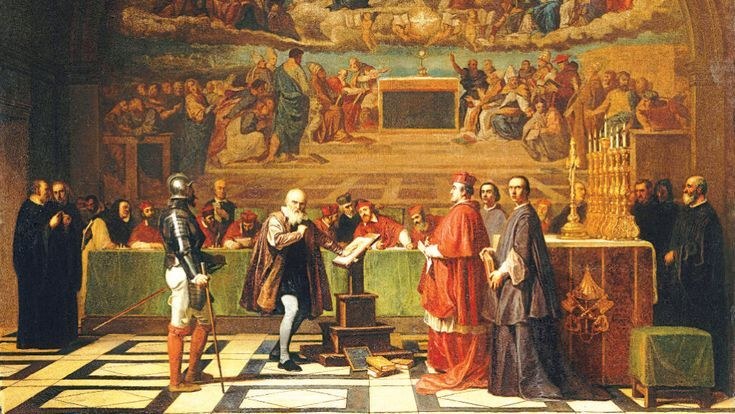
A clear indication that the conservative medieval Church had no connection with true devotion is the fact that scientists such as Galileo, who were subjected to pressure by this Church, were in fact extremely devout people. (More detailed information about the beliefs of these scientists will be given in the second section of this guide.) This example too shows once again that the pressure that scholastic thought applied to science was the result not of devotion but of the distortion of religion.
The Qur'an, on the other hand, is the revelation of God and has not been subjected to any change; not a single letter of it has been altered. For this reason there is not the slightest contradiction or error in the Qur'an. The information that God gives in the Qur'an coincides with scientific discoveries. Indeed, many scientific truths discovered only in our century were made known to people in the Qur'an 1400 years ago. This is an important miracle of the Qur'an and one of the definitive proofs that it is the revelation of God. (Some of the scientific truths revealed in the Qur'an will be discussed in the following sections.)
The Claim That "Science Must Be Materialist"
Another propaganda tool of the materialists is the stereotyped claim that "science studies only matter, and therefore it must be materialist".
This is in fact nothing but a play on words that a person who thinks a little will immediately understand. It is true that science studies matter, but this does not mean that "science must be materialist". For "studying matter" and "being materialist" are very different things.
In studying matter, we come to the conclusion that matter has come into being as a result of a very great knowledge and design. Even though we do not see the designer of this knowledge and design, we understand that it was produced consciously. For example, let us imagine a cave about which we are not sure whether anyone entered it before us. If, on entering this cave, there are amazing paintings drawn with very great skill on the walls of the cave, we will think, "before us an intelligent being was here and created works here". Even though we never see that intelligent being, we understand its existence from its works.
Science studies nature by exactly these methods, and reveals that there is an order in nature that can never be explained in material terms, and that this is a design that could only be created by a superior Intellect standing above matter. In other words, it sees in every part of the material world clear evidence of God's existence and dominion.
The Conservative and Fanatical Approaches of the Materialists
Of course, everyone who holds a certain opinion is free to check whether his opinion is confirmed from the standpoint of scientific truths and to carry out scientific research on this. For example, a person may come forward and claim that the world is flat, and may carry out research on this subject. The important thing, however, is how this person will evaluate the scientific results he encounters. Among the scientific facts he will encounter countless evidences that the world is spherical. In that case this person should behave fairly, accept the truth and give up his earlier claim.
The same situation applies to materialism. Science has proven that matter is not an absolute being and that it had a beginning. Moreover, it has shown that there is an extraordinary design in matter. Materialist scientists studying matter have also witnessed that their theories are not true and that the truth is the exact opposite of what they believe.
Interestingly, however, these people have become blindly attached to materialism and stubbornly refuse to give up this "belief". Richard Lewontin, a famous evolutionist with a materialist worldview and professor of genetics at Harvard University, admits this fanatical materialist behaviour as follows:
"We have a prior commitment, a commitment to materialism; this is an 'a priori' belief (one accepted in advance and assumed to be true). It is not that the methods and institutions of science somehow compel us to accept a material explanation of the phenomenal world, but, on the contrary, that we are forced by our a priori adherence to materialism to create an apparatus of investigation and a set of concepts that produce material explanations. Moreover, that materialism is absolute, for we cannot allow a Divine Foot in the door."44
Lewontin openly voices the mindset of all materialists. As he states in these words, the materialists first adopt the materialist ideology and then look for information that will confirm this ideology. In other words, materialism is not a conclusion they have reached through scientific research, but a mistaken judgement that they try to impose on science.
The same situation can be seen in the mindset of another evolutionist. The well-known evolutionist Robert Shapiro, in his book Origins: A Skeptic's Guide to the Creation of Life on Earth, expressed his devotion to the theory of evolution as follows:
"And among them are some who listen to you, but We have placed covers on their hearts, preventing them from understanding it, and heaviness in their ears. Even if they see every Sign, they still do not believe, so that when they come to you, disputing with you, those who disbelieve say, 'This is nothing but the myths of previous peoples!'"
"Some future day may yet arrive when all reasonable chemical experiments run to discover a probable origin for life have failed unequivocally. Further, new geological evidence may indicate a sudden appearance of life on the earth. Finally, we may have explored the universe and found no trace of life, or process leading to life, elsewhere. In such a case, some scientists might choose to turn to religion for an answer. Others, however, myself included, would attempt to sort out the surviving less probable scientific explanations in the hope of selecting one that was still more likely than the remainder."45
What Shapiro is pointing to when he says "we will continue to look for a scientific explanation" is in fact a "materialist explanation". This blind attachment to materialism drags Shapiro and thousands of people like him into fanatical denial. What they actually mean to say is the sentence: "Whatever evidence we see, we will not believe in God."
Interestingly, this delusion is not peculiar to the materialists of our time. In the Qur'an God gives important information about such people who are obstinate in denying Him. For example, the Egyptians who, in the face of the many miracles he showed them, said the following to the Prophet Moses, have the same character as modern materialists:
"No matter what Sign you bring us to bewitch us, we will not believe in you!"
In other verses God speaks of such people as follows:
"Among them (the idolaters) are some who listen to you, but We have placed covers on their hearts, preventing them from understanding it, and heaviness in their ears. Even if they see every Sign, they still do not believe, so that when they come to you, disputing with you, those who disbelieve say, 'This is nothing but the myths of previous peoples!'"
"They have sworn by God with their most earnest oaths that if a Sign comes to them they will believe in it. Say: 'The Signs are in God's control alone.' What will make you realise that even if a Sign did come, they still would not believe?"