Islam is the religion of reason and conscience. With his reason a person sees the truths that God has made known, and by using his conscience he draws conclusions from what he sees. For example, a person possessed of reason and conscience, even if he has no particular knowledge and despite his limited learning, will understand, by examining the features of any being in the universe, that it was created by a Possessor of superior Intellect, Knowledge and Power. Seeing just a few of the thousands of conditions necessary for life to emerge on earth is enough for him to realise that the Earth is a planet specially created so that people can live on it. Such a person of reason and conscience easily grasps that the claim that the world came into being by chance is illogical. In short, everyone who thinks by using his reason and conscience can clearly see the evidence of God's existence. God speaks of such people in a verse as follows:
"Those who remember God, standing, sitting and lying on their sides, and reflect on the creation of the heavens and the earth:
'Our Lord, You have not created this for nothing. Glory be to You! So safeguard us from the punishment of the Fire.'"
For this reason, in the Qur'an God calls on people to reflect upon and investigate the evidence of creation surrounding them. Everyone who examines the systems present throughout the universe and living and non-living beings, and who reflects upon and investigates what he sees, will begin to come to know God's superior intellect, His knowledge and His infinite power. Some of the subjects upon which God calls people to reflect are stated in the verses as follows:
"Have they not looked at the sky above them:
how We structured it and made it beautiful, and how there are no fissures in it? And the earth: how We stretched it out and cast firmly embedded mountains onto it and caused luxuriant plants of every kind to grow in it, an instruction and a reminder for every penitent servant. And We sent down blessed water from the sky and made gardens grow by it and grain for harvesting, and soaring date-palms with layered spathes."
For every thinking person possessed of reason and conscience, the evidence of the existence of God, the supreme Creator, is clearly visible in the universe.
"He Who created the seven heavens in layers. You will not find any flaw in the creation of the All-Merciful. Look again:
As can be seen from the verses above, God calls on people to research and investigate such subjects as the sky, rain, plants, animals, birth and geographical features. One of the ways of investigating and researching all these beings, as we said at the beginning, is science. The information obtained as a result of scientific research makes people acquainted with the secrets of creation and with God's infinite knowledge, intellect and power. This is also the reason why most of the scientists who have rendered great services to humanity throughout history have been devout people who believed in God: science is a way of appreciating God's might...
"He is the Originator of the heavens and the earth from nothing"
Belief in God Gives Scientists Great Enthusiasm and Excitement
As we mentioned above, religion encourages science, and people of reason and conscience who are engaged in science, because they witness the evidence of God's existence at very close quarters, at the same time come to possess a strong faith. For in every investigation and every new discovery these people encounter a perfect system, a flawless detail created by God.
For example, a scientist examining the eye, merely by seeing the complex system in the human eye, will understand that it could never have come about by chance, in stages. Examining it a little further, he will witness that every detail making up the eye has a miraculous creation. He will see that the eye consists of dozens of separate, mutually compatible parts, and his admiration for God, Who created it, will grow many times over.
In the same way, a scientist investigating the universe suddenly finds himself face to face with thousands of miraculous balances.
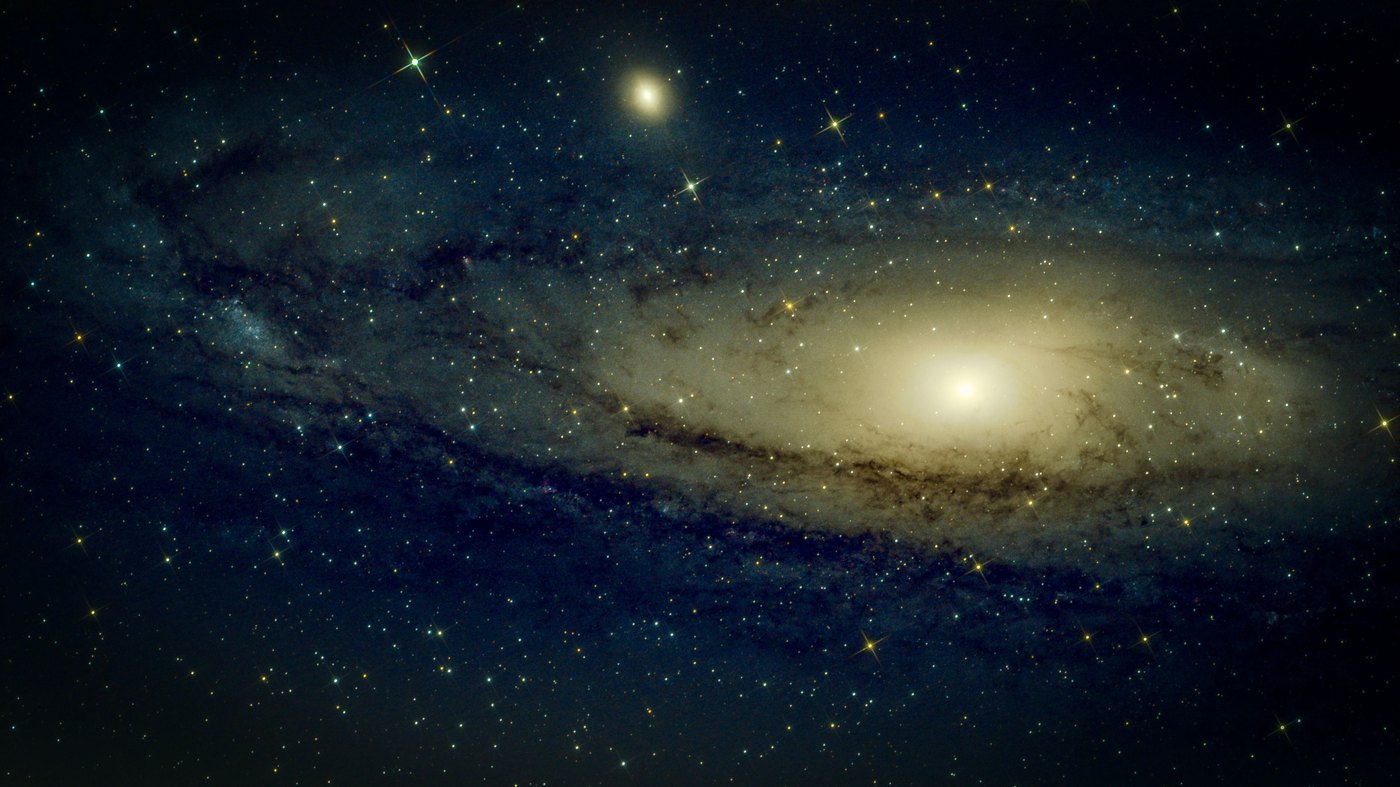
The existence, in great harmony, of billions of galaxies located in boundless space whose limits cannot be determined, and of the billions of stars in these galaxies, gives him a great enthusiasm for research.
As a result of all this, a person of faith becomes extremely eager and determined to carry out scientific research and to learn the secrets of the universe. Albert Einstein, regarded as the greatest genius of our time, described in one of his writings this encouraging power that believing scientists draw from religion as follows:
"I maintain that the cosmic religious feeling is the strongest and noblest motive for scientific research. Without doubt, those who first united this feeling with their scientific thinking have felt it most powerfully. Understanding the structure of the universe scientifically and rationally gives a person the deepest feeling of faith. The conception of the universe that Kepler and Newton grasped after years of labour gave them just such deep feelings. Those who content themselves only with the practical side of scientific research have always and everywhere given false explanations on this subject. But this feeling and inspiration fill the hearts of people who have devoted their lives entirely to scientific research, and it is precisely such people who continue their research in spite of a thousand and one difficulties. They draw this strength from religious feeling. A contemporary has said, quite rightly: in this materialistic age of ours, those who first explored the path of positive science have felt the deepest religious feeling."1 Johannes Kepler said that he was interested in science in order to take delight in the works of the Creator, and Isaac Newton, regarded as one of the greatest scientists in history, said that the reason he carried out scientific research was his desire to find and know God.
These words belong to just a few of the best-known scientists in world history. These men, and hundreds of other scientists like them whom we will examine in the following sections, are people who came to believe in God's existence by investigating the universe, and who, moved by the laws and phenomena that God has created in splendour, wanted to discover even more.
As can be seen, the desire to see how God created the universe has been the greatest source of motivation for many scientists in history. For a person who grasps that the universe and living things were created also understands that there is a purpose in this creation. And purpose, of course, gives rise to meaning. The desire to grasp this meaning, to find its evidence and to investigate its details lends great strength to scientific work. At the same time, if the truth that the universe and living things were created is denied, this meaning will also disappear. For example, a scientist who believes in materialist philosophy and Darwinism will suppose that there is no purpose in the universe and that everything is the product of blind chance. In that case, investigating the universe and living things no longer has any real meaning either. Einstein expressed this truth as follows: "if the religious feeling is lost, science degenerates into uninspired empiricism".2
In that case, the only aim a scientist will set himself is to become famous through a discovery he makes, to go down in history, or to earn a lot of money. These goals, however, may separate him from sincerity and scientific honesty. For example, if a conclusion he has reached on the basis of scientific discoveries contradicts the view prevailing in the world of science, he may fall prey to anxieties such as losing his reputation, being censured or being humiliated, and feel compelled to conceal it.
The long acceptance of the theory of evolution in the world of science is an example of this insincerity. In fact, many scientists confronted with scientific facts see and understand that the theory of evolution is incapable of explaining life, but do not voice this simply to avoid being subjected to pressure. The British physicist H. S. Lipson says the following on this matter:
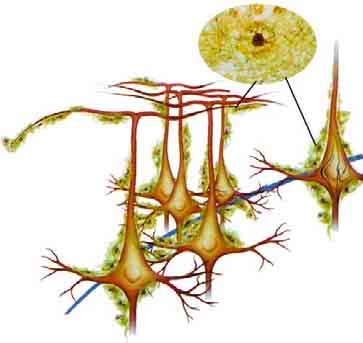
"We know a great deal more about living things than Darwin did. We know, for example, how nerves work, and I think each nerve is a masterpiece of electrical engineering. There are billions of them in our bodies... In this case the word that comes to my mind is 'design'. But my biologist colleagues do not like this word at all."3
They want the word "design", which expresses creation, to be removed from the scientific literature simply because they do not like it, and a great many scientists submit to this dogmatic worldview. Lipson explains this fact as follows:
"In fact, evolution became in a sense a scientific religion; almost all scientists have accepted it and many are prepared to 'bend' their observations to fit in with it."4
This contradictory situation is a result of the delusion of "science without religion", which began to dominate the world of science from the middle of the 19th century. As Einstein stated, "science without religion is lame".5 Therefore this delusion has both directed the world of science towards wrong goals and produced scientists who remain indifferent even though they see that these goals are wrong. We will examine the first of these two effects in detail in the following pages.
The Zeal for Service of Believing Scientists
Since scientists who believe in God's existence and greatness have no worldly desires such as rank, position, fame or money, the efforts they make in scientific research are also extremely sincere. These people know that every secret of the universe they discover will make God known to all people and will show people God's infinite power and knowledge. Telling people about God's existence and making the truth of creation known is, without doubt, an important act of worship for a believer.
With these sincere thoughts, believing scientists carry out important work throughout their lives, with great enthusiasm, in order to discover the laws in the universe, the miraculous systems in nature, and the flawless mechanisms and intelligent behaviour in living things. From their work they also obtain extremely beneficial results and achieve great progress. Encountering difficulties along the way does not make them retreat, and even if they receive no reward from people, they do not lose their enthusiasm. For what they aim at in what they do is precisely to earn God's good pleasure.
Those who suppose that science will develop by keeping away from religion are, without doubt, greatly mistaken. First of all, those who do not believe in God cannot experience the spiritual enthusiasm that faith gives. Perhaps the scientific research they began with great excitement will, after a while, begin to seem to them like ordinary and monotonous events. The aim in life of people who think this way consists of obtaining benefits tied to the life of this world in a short time. Therefore these people work for the sake of worldly desires such as money, position, fame and prestige. For example, a scientist who thinks this way and wants to build a career at a university will work only in fields that will raise him to a higher position. Even if there is a matter that he thinks may benefit people, he will not do research in a field from which he will gain nothing in terms of his own interest. If two subjects for research come before him, he will weigh up which of the two will bring him more material income, prestige and position, and he will turn away from the other even if he knows that it would lead to a result more beneficial for people. In short, such people do not try to benefit or serve people who bring them no benefit. If the question of gaining benefit is removed, their determination to work also disappears.
The enthusiasm and excitement experienced by a person who believes in God, on the other hand, opens up broad opportunities for people not only in the field of science but in many other fields of activity such as art and culture, and it continues without ever running out, indeed growing ever greater.