Science is the investigation of the material world we live in through experiment and observation. Naturally, in carrying out these investigations, science will draw conclusions based on, and taking into account, the facts it obtains through experiment and observation. At the same time, however, in every field of science there are certain basic premises that are accepted before research begins. All these premises together are generally called a "paradigm".
These basic premises determine the "course" of the scientific research to be carried out. The first step in scientific research is to formulate a "hypothesis" (a supposition). Scientists first put forward a certain hypothesis about the subject they are going to investigate. This hypothesis is then tested against scientific facts. If the experiments and observations carried out confirm the hypothesis, the "hypothesis" is called a "proven principle or law". If the hypothesis is refuted, other possibilities are tested and the process continues.
If one looks carefully, the formulation of the hypothesis, which is the first stage of this process, is connected to the view that scientists hold, which may be entirely wrong. For example, because of such a mistaken view, scientists may put forward a hypothesis such as "matter has the ability to organise itself without any conscious ordering". They may then carry out long research lasting for years in order to confirm this hypothesis. But matter has no such property and, consequently, all these efforts will end in failure. Indeed, if scientists insist very strongly on this hypothesis, the research may continue for years, even for generations. The result is an enormous loss of time and resources. Yet if they had begun from the idea that "it is not possible for matter to organise itself without any conscious ordering", the scientific research based on it would also have progressed very rapidly and accurately.
If one pays attention, this aspect, that is, the correct formulation of the hypothesis, requires a source other than scientific findings. Identifying this source correctly is very important because, as in the example we have just given, a wrong identification of the source may cause the world of science to lose years, decades, even centuries.
The source being sought is precisely the revelation that God has conveyed to people. For God is the Creator of the universe and of all living things, and consequently the truest and most indisputable information on these subjects is the information that comes from God. Indeed, in the Qur'an God gives us important information on these subjects. We may list the clearest of them as follows:
God created the universe from nothing. Everything has been created with a purpose. As a consequence of this truth, what exists in nature and throughout the universe is not a chaos produced by chance, but a flawless, created order.
All the properties of the material universe, and especially of the Earth on which we live, have been created to suit human life. There is a definite purpose in the movements of the stars and planets, in the landforms of the earth and in the properties of water or the atmosphere, which makes human life possible.
God created all species of living things. Moreover, as stated in the example of the honeybees, the behaviour of these creatures too comes about through a special inspiration from God.
These are the absolute truths that God teaches us through the Qur'an. An approach to science based on these truths will, without any doubt, achieve very great success and serve humanity in a highly beneficial way. Indeed, there are clear examples of this in history. The scientific progress observed in the Muslim world in the 9th and 10th centuries was made possible precisely because science was built upon the right foundations listed above. In the West too, all the pioneering representatives of such fields of science as physics, chemistry, astronomy, biology and paleontology were great scientists who believed in God's existence and who carried out research with the aim of investigating what He had created.
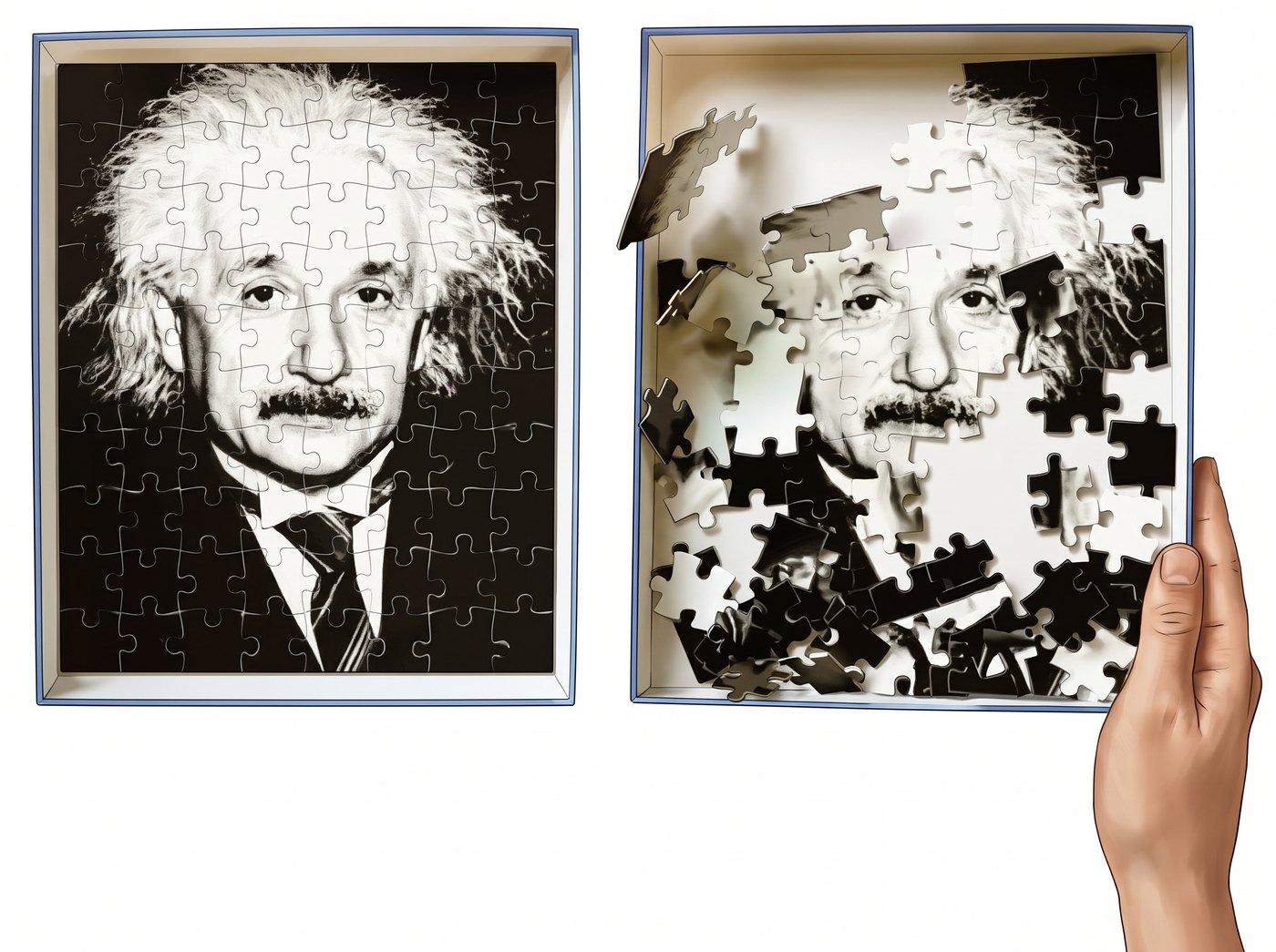
Einstein expressed as follows the importance of referring to religious truths when people determine their goals:
"Religion determines man's true goal. But science also has things to say on the question of what means it is important to resort to. Science is shaped and given definite frameworks by those who wish to learn the truth completely. But even so, its source lies to a great extent in religion. I cannot conceive of a scientist who does not possess a profound faith."6
From the middle of the 19th century onwards, however, the world of science was led away from this divine foundation and fell under the influence of materialist philosophy.
Materialism is a way of thinking whose history goes back to ancient Greece; it upholds the absolute existence of matter and denies God.
Materialism gradually imposed these claims on the world of science, and from the second half of the 19th century onwards a large part of scientific research was devoted to supporting them. To this end, the "infinite universe model", which supposes that the universe has existed for all eternity, Darwin's theory of evolution, which proposes that life came into being as a result of chance, Freud's views, which claim that the human mind consists of the brain, and similar theories were put forward.
Today, however, when we look back, we see that these claims of materialism have "brought" science nothing but a loss of time. For many scientists strove for decades to prove each of these claims, but the results that emerged showed that the claims were invalid. Discoveries have proven, exactly as God reveals in the Qur'an, that the universe was created from nothing, that it is ordered according to a purpose that takes human life into account, and that it is impossible for life to have come about by chance and to have undergone evolution.
Let us now examine these truths in turn:
What Science Lost as a Result of the Materialists' "Infinite Universe" Ideas
Until the beginning of the 20th century, the view prevalent in the world of science, which was dominated by materialists, was that the universe was infinite in size, had existed for all eternity and would continue to exist for all eternity. According to this belief, called the "static universe model", the universe had no beginning and no end; the universe was the sum of an unlimited quantity of matter. This view, which forms the basis of materialist philosophy, also denied that the universe was created.
A great many scientists who believed in materialism or had come under the influence of this philosophy took this "infinite universe" model as the basis of their scientific activity. All work in the fields of astronomy and physics was based on the assumption that matter has existed for all eternity. In short, many scientists strove in vain for many years. For before long, science would destroy these myths.
The first person to see that the infinite universe model was wrong and to put forward a scientific alternative to it was the Belgian scientist Georges Lemaître. Basing himself on certain calculations by the Russian scientist Alexander Friedmann, Lemaître put forward the theory that the universe in fact had a beginning and has been expanding continuously since that beginning. In addition, he stated that the radiation left over from that initial moment could be detected.
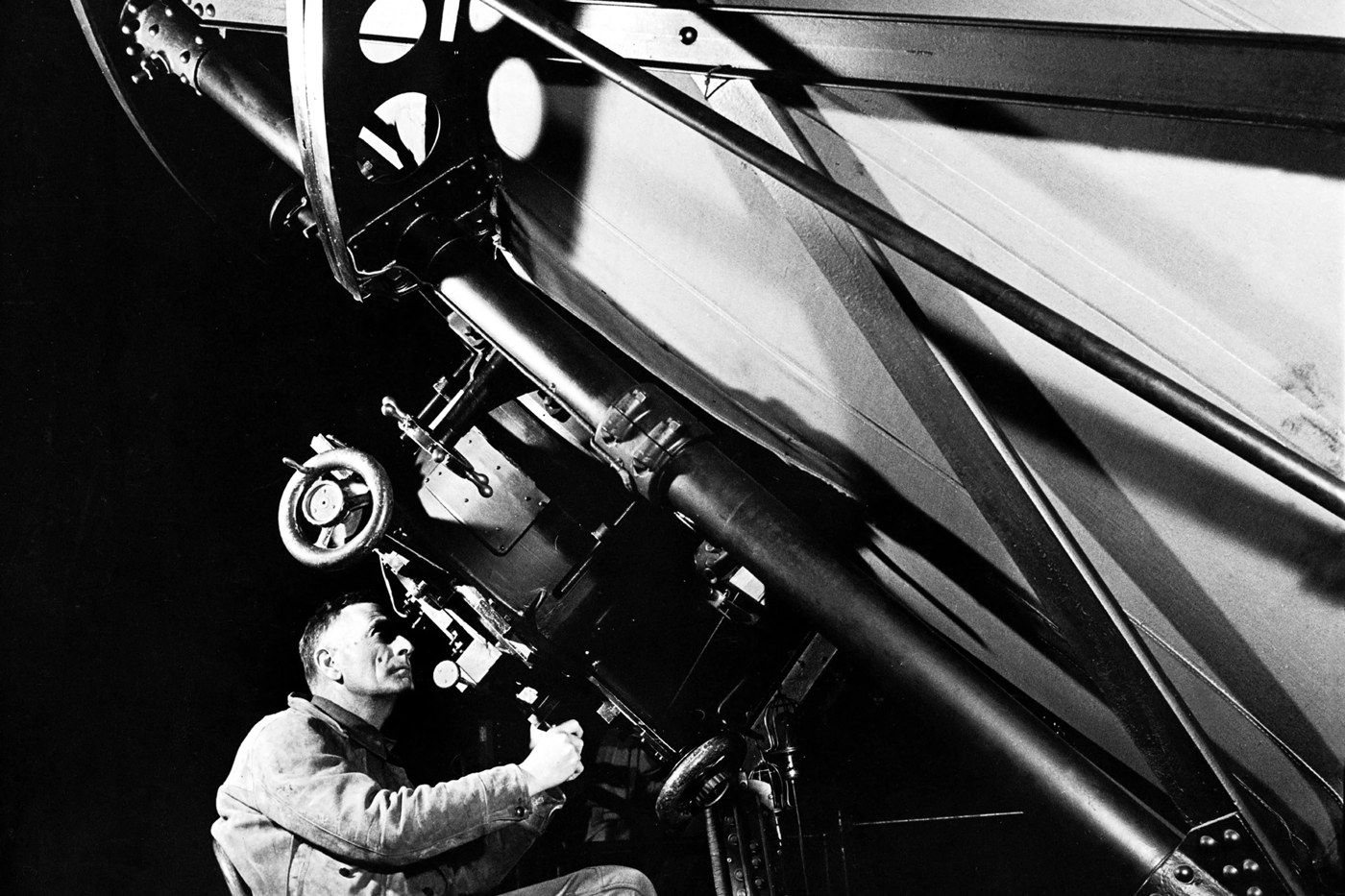
With the giant telescope he used, Hubble discovered that the stars are continuously moving away both from us and from one another.
It must also be emphasised here that Georges Lemaître was at the same time a man of religion. Lemaître sincerely believed that "God created the universe from nothing". In other words, he approached science from a foundation very different from that of the materialists.
The following years would reveal that the foundation Lemaître believed in was correct. First, the American astronomer Edwin Hubble discovered, with the giant telescope he used, that the stars are continuously moving away both from us and from one another. If everything in the universe was moving away from everything else, this pointed to just one conclusion: the universe was expanding; that is, it was not motionless, as the materialists claimed.
In fact, Albert Einstein had calculated theoretically some time earlier that the universe was not static. However, because the facts he obtained from these calculations did not agree with the static universe model of that time, he did not pursue this discovery and set it aside. Einstein later called this episode "the biggest blunder of his career".
The expansion of the universe pointed to another important truth: since the universe is expanding, going backwards in time revealed that the universe had begun to expand from a single point. The calculations carried out made it clear that this single point had zero volume. The universe itself had come into being as a result of the explosion of this point. This explosion was named the "Big Bang", that is, the "Great Explosion".
In fact, the expression that this exploding point had zero volume is used theoretically. For the equivalent of the expression "zero volume" is "nothingness". In other words, the universe came into being from nothingness. To put it most accurately, it "was created from nothing".
The "Big Bang" theory clearly shows the truth of creation from nothing. However, for this theory to be accepted, scientific evidence for it also had to be found. In 1948 George Gamow proposed that, if the universe had come into being through a great explosion, then, as Lemaître had also stated earlier, there should be radiation left over from this explosion in the universe, and this radiation should be present in equal amounts in every part of the universe.
The evidence that Gamow said had to be found was discovered within a short time. In 1965 two researchers named Arno Penzias and Robert Wilson discovered the remnants of this radiation. This radiation, named "Cosmic Background Radiation", did not originate from the Earth, but was radiation spread throughout every part of the universe. Thus it emerged that the heat wave received in equal measure from every part of the universe had been left over from the first periods of the "Big Bang". Penzias and Wilson were awarded the Nobel Prize for this discovery.
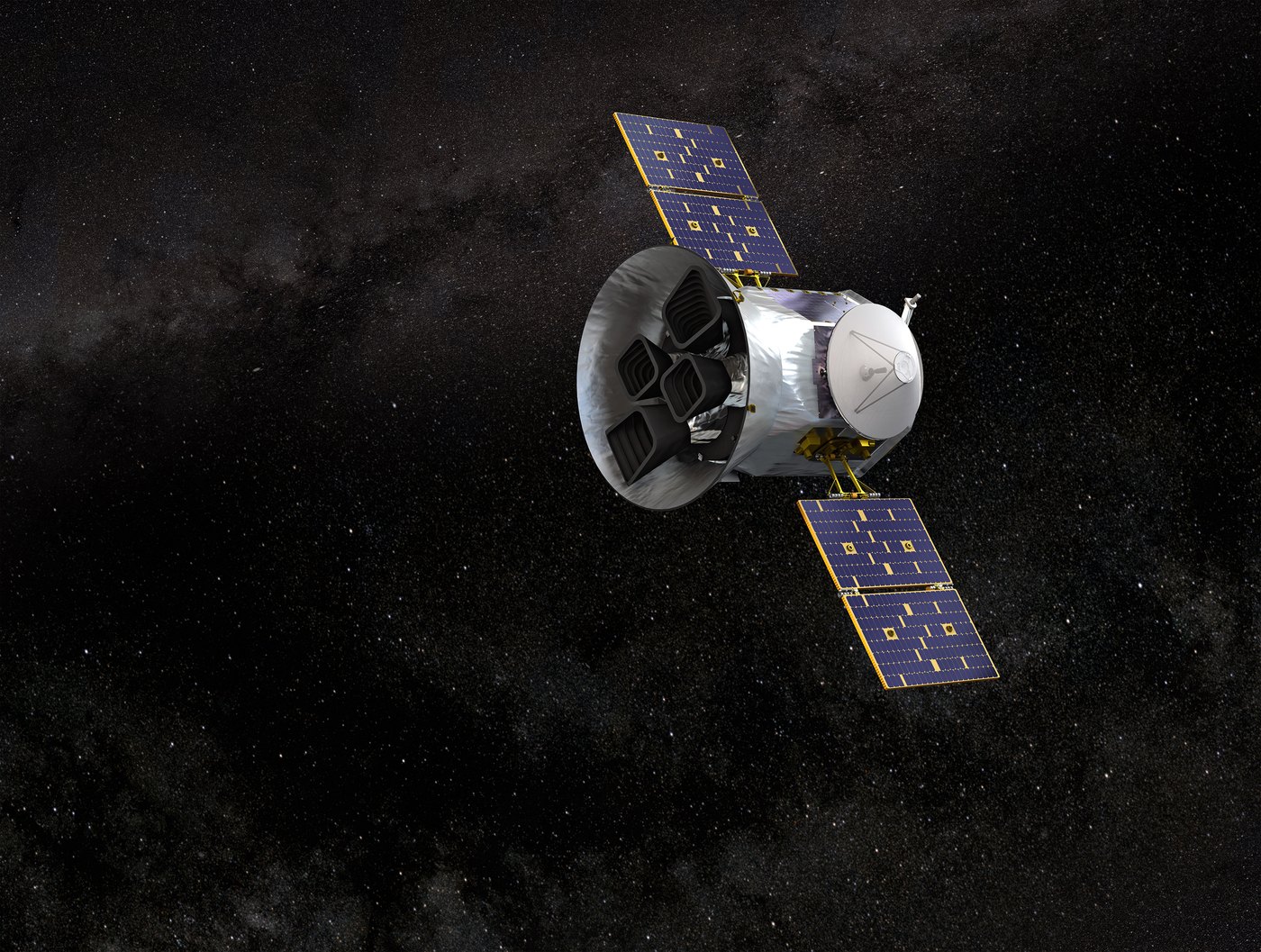
Within a short time the COBE satellite found the evidence for the "Big Bang" hypothesis.
In 1989 NASA, the American National Aeronautics and Space Administration, sent the "COBE" satellite into space to investigate the Cosmic Background Radiation. The sensitive sensors installed on this advanced satellite confirmed the calculations of Penzias and Wilson within a few minutes.
The proof, through this very evidence, that the universe was created from nothing by God with the "Big Bang" greatly confounded materialist scientists. For they witnessed their years of work, the ideas they had put forward and their groundless theories collapse one after another. The well-known atheist philosopher Antony Flew expresses his thoughts on this matter as follows:
"Notoriously, confession is good for the soul. I too will make a confession: the 'Big Bang' model is quite embarrassing from an atheist's point of view. For science has proven a claim defended by religious sources: the claim that the universe had a beginning. I still believe in atheism, but I must confess that it is neither easy nor comfortable to defend it in the face of the 'Big Bang'."7 As can be seen from this example, some people who believe blindly in materialism do not want to accept scientific evidence, however much of it confronts them. Even when they personally admit this truth, they cannot give up their attachment to materialism.
Nevertheless, today many scientists who once denied God's existence and believed in an atheist worldview have accepted that the universe was created by God, the Possessor of infinite power. For example, the American scientist William Lane Craig, known for his work on the "Big Bang", says the following on this matter:
"Indeed, given the truth of the maxim 'out of nothing, nothing comes', the 'Big Bang' requires a supernatural cause. Since the initial singularity represents the terminus of all spacetime concepts, there cannot be any physical cause of the 'Big Bang'. Rather, the cause of the Big Bang must transcend physical space and time altogether, be entirely independent of the universe, and be powerful to a degree the mind cannot conceive. Moreover, this cause must itself be a conscious being endowed with free will... The cause of the origin of the universe is therefore a Creator who, a finite time ago, brought the universe into existence purely by His own will."8
An important conclusion that the "Big Bang" theory shows us is, as we stated at the beginning, that an approach to science that refers to divine knowledge is extremely successful in unlocking the secrets of the universe. Scientists who based themselves on materialist philosophy put forward the "infinite universe" model, but despite all their efforts they were unable to substantiate this theory. The "Big Bang" theory, on the other hand, which Georges Lemaître put forward on the basis of religious sources, gave impetus to the development of science and made it possible to understand the true beginning of the universe. When we look at the history of science in the 20th century, we can see that a similar situation exists in other fields too.
What Science Lost as a Result of the Claim That "There Is No Order in the Universe"
Just as the materialists maintained that the universe has existed for all eternity, they also claimed that there is no purpose or order in the universe. They proposed that all the order, harmony and compatibility in the universe were merely the result of chance. This claim, like the one in the previous pages, dominated the world of science from the second half of the 19th century onwards and directed scientific work.
For example, a hypothesis called "chaos theory" was put forward in order to be able to show that there is no order in the universe. As we touched on in the previous pages, this theory claimed that order would arise spontaneously out of chaos (disorder), and countless scientific studies were carried out to support this claim. Mathematical calculations, studies in theoretical physics, physical experiments and chemical research were continually pursued in order to find an answer to the question "how can it be shown that the universe is the result of chaos?"
In reality, however, every new piece of research made their chaos and chance hypotheses even more untenable and showed that there is in truth a very great order in the universe. In particular, research carried out since the 1960s reveals that all the physical regularities in the universe have been ordered in a very finely tuned way for human life. As research continued, it was revealed one by one that the laws of physics, chemistry and biology in the universe, the fundamental forces such as gravity and electromagnetism, and the structures of atoms and elements have been ordered exactly as they need to be for human life.
If we see a complex system, we immediately understand that it was made by a conscious, intelligent being.
Western scientists today call this extraordinary order the "Anthropic Principle". This principle in essence upholds that every detail in the universe has been ordered for a purpose that takes human life into account.
With this conclusion, it has emerged that the indoctrination which materialist philosophy imposed on the world of science, namely that "the universe is a heap of matter with no purpose or meaning in it, functioning by chance", is in reality a fairy tale contrary to science. The famous molecular biologist Michael Denton comments on this matter as follows in his book Nature's Destiny: How the Laws of Biology Reveal Purpose in the Universe:
"The new picture that has emerged in twentieth-century astronomy presents a dramatic challenge to the presumption which has been prevalent within scientific circles during most of the past four centuries: that life is a peripheral and purely contingent phenomenon in the cosmic scheme... The evidence provided by modern cosmology and physics is exactly the kind of evidence that the natural theologians were looking for in the seventeenth century but failed to find in the science of their day."9
The "natural theologians" referred to in this comment are the devout scientists who lived in the 17th and 18th centuries and who aimed to invalidate atheism and prove the existence of God on the basis of scientific evidence. However, as also stated in the comment above, the weak level of science at that time meant that sufficient evidence could not be brought for the truths these scientists explained, and as a result the materialist ideology came to dominate the world of science in the 19th century. In fact, the science of the 20th century reversed this process and brought to light clear evidence proving that God created the universe.
The point that needs attention here is the loss of time that the materialist superstition "there is no purpose or order in the universe" has brought upon the world of science. All the theories, formulae, studies in theoretical physics, mathematical equations and so on put forward to support this superstition are, each one of them, efforts expended in vain. Just as the racist ideology dragged humanity into disaster by fanning the flames of the Second World War, the materialist ideology too has dragged the world of science into darkness for nothing.
Yet if the world of science had taken as its foundation the truth that God created the universe, instead of the error of materialism, scientific research too would have been carried out in accordance with this truth.
What the World of Science Lost as a Result of the Desperate Efforts to Prove the Theory of Evolution
The clearest example of science being built on wrong foundations can be seen in Darwin's theory of evolution. This theory, which entered the world of science 140 years ago, has in fact been the greatest error in the entire history of science.
The theory of evolution claims that life came into being through the chance combination of certain inanimate substances. According to this claim, these living things that came into being by chance then evolved, again as a result of chance, and turned into other living things. Great efforts have been made for more than a century and a half to prove this scenario, but the scientific evidence always works against the theory. Indeed, all the evidence obtained shows that evolution never took place, that it is untrue that living things gradually turned into one another, and that all species of living things were created separately and as they are.
Even so, despite all this clear evidence, evolutionists continue to carry out countless studies and experiments to prove evolution, to write volumes of books consisting of nothing but nonsense and lies, to found institutes, hold conferences and produce television programmes. The waste of thousands of scientists and of vast sums of money and resources on a claim that is not true is a great loss for humanity. Instead of all this harm, if these resources had been used properly, very important steps could have been taken in very beneficial fields of science and accurate results obtained by now.
Some scientists and thinkers see what a great error evolution is. The British journalist and thinker Malcolm Muggeridge says the following on this matter:
"I myself am convinced that the theory of evolution will be one of the great jokes in the history books of the future. Posterity will marvel that so very flimsy and dubious an hypothesis could be accepted with the incredible credulity that it has."10
The Scandinavian scientist Søren Løvtrup, in his book Darwinism: The Refutation of a Myth, says:
"I suppose that nobody will deny that it is a great misfortune if an entire branch of science becomes addicted to a false theory. But this is what has happened in biology: for a long time now people discuss evolutionary problems in a peculiar 'Darwinian' vocabulary – 'adaptation', 'selection pressure', 'natural selection', etc. – thereby believing that they contribute to the explanation of natural events. They do not... I believe that one day the Darwinian myth will be ranked the greatest deceit in the history of science."11
Some evolutionist scientists even sense that the theory they defend does not accord with the facts and are troubled by this situation. The evolutionist scientist Paul R. Ehrlich, in an article in the journal Science, admits, albeit indirectly, the harm that blind belief in the theory of evolution does to science, saying that "the perpetuation today of the theory of evolution as a dogma will be an obstacle to more satisfactory explanations of the observed world".12
Let us now examine the struggles waged in support of the theory of evolution's claims, which are contrary to science, and which in reality have caused science nothing but a loss of time and resources.
The Losses Brought to Science by the Claim That "Inanimate Matter
Can Produce Life"
What is the source of life? What distinguishes a bird or a giraffe from stone, water and soil, in short, from inanimate matter?
The answer to this question has been sought since ancient times in history. The views that have emerged on this subject fall into two different camps. The first view maintains that there is a very fine boundary between living things and inanimate matter, that this boundary can easily be crossed and that inanimate matter can come to life by itself. In scientific language this view is called "abiogenesis".
The second view accepts that there is a great and insurmountable boundary between life and inanimate matter. Inanimate matter cannot come to life by itself, and every living thing is born only from another living thing. This view, expressed by the sentence "Life comes from life", is called "biogenesis".
It is interesting that the idea of "abiogenesis" is connected with materialist philosophy, while the idea of "biogenesis" is connected with religious sources. Materialist philosophy has always maintained from the beginning that inanimate matter can come to life. Thinkers in ancient Greece believed that simple living things were continually born out of inanimate matter.
In contrast, divine sources state that it is God alone Who gives life to matter. The verses of the Qur'an state:
"God is He Who splits the seed and kernel. He brings out the living from the dead, and produces the dead out of the living. That is God, so how are you perverted?"
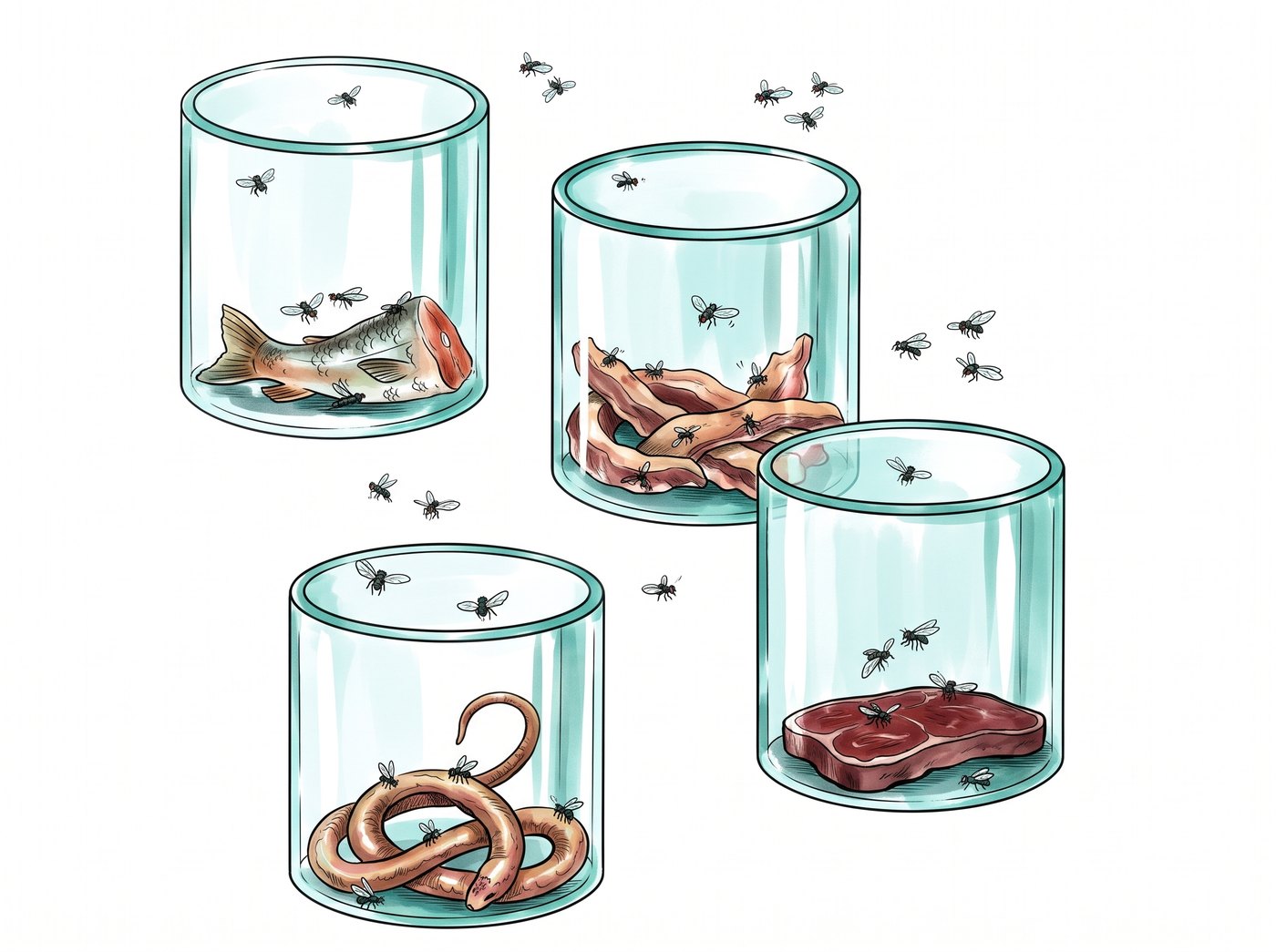
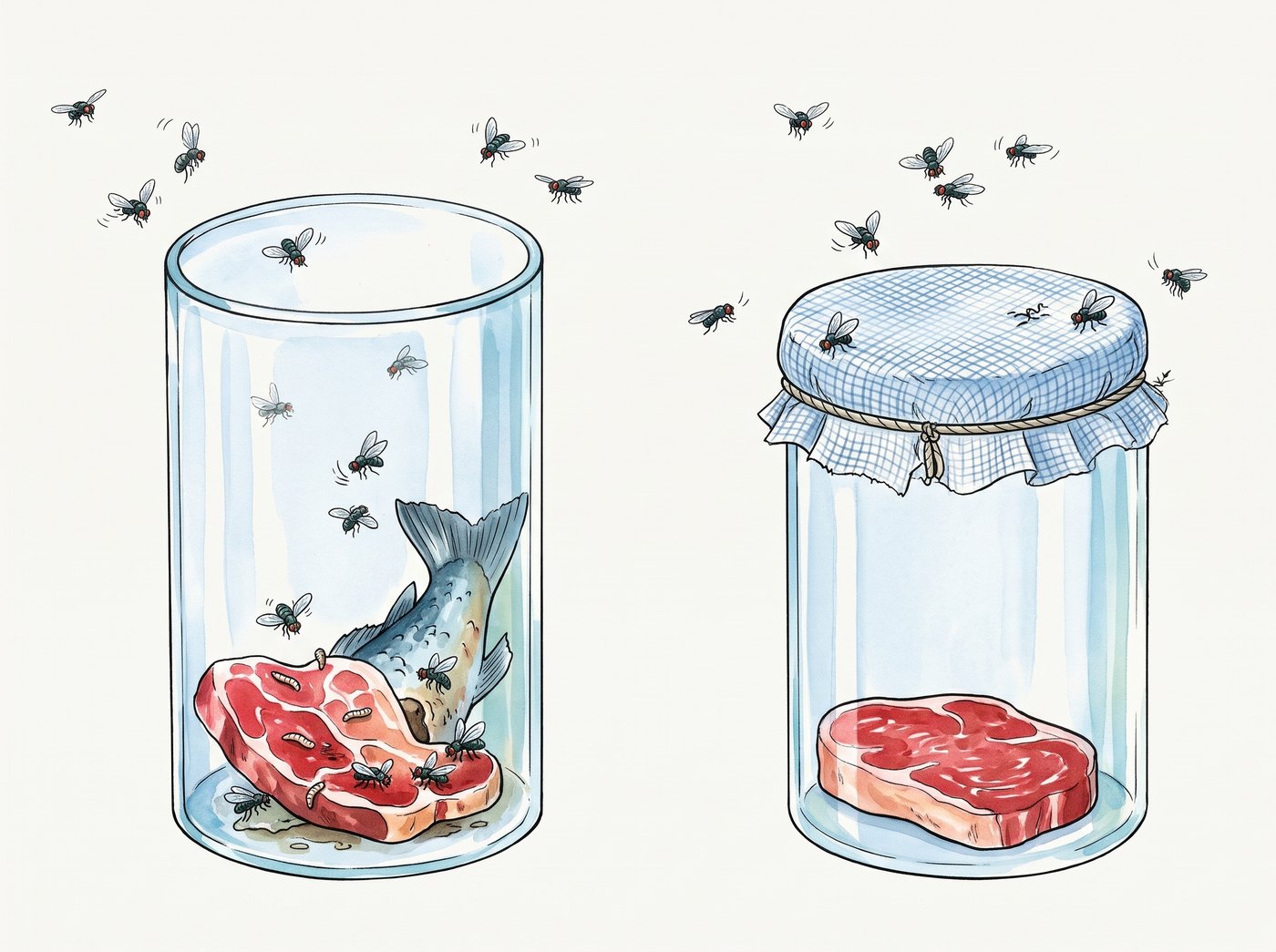
In the Middle Ages, when people's knowledge of nature was very limited, belief in "abiogenesis" was widespread as a result of certain mistaken observations. People who saw maggots infesting meat left out in the open believed that the maggots had formed "by themselves" on the meat. They also supposed that the mice in granaries formed by themselves out of the heaps of wheat. This belief, known as "spontaneous generation", was accepted by the broad masses until the 17th century.
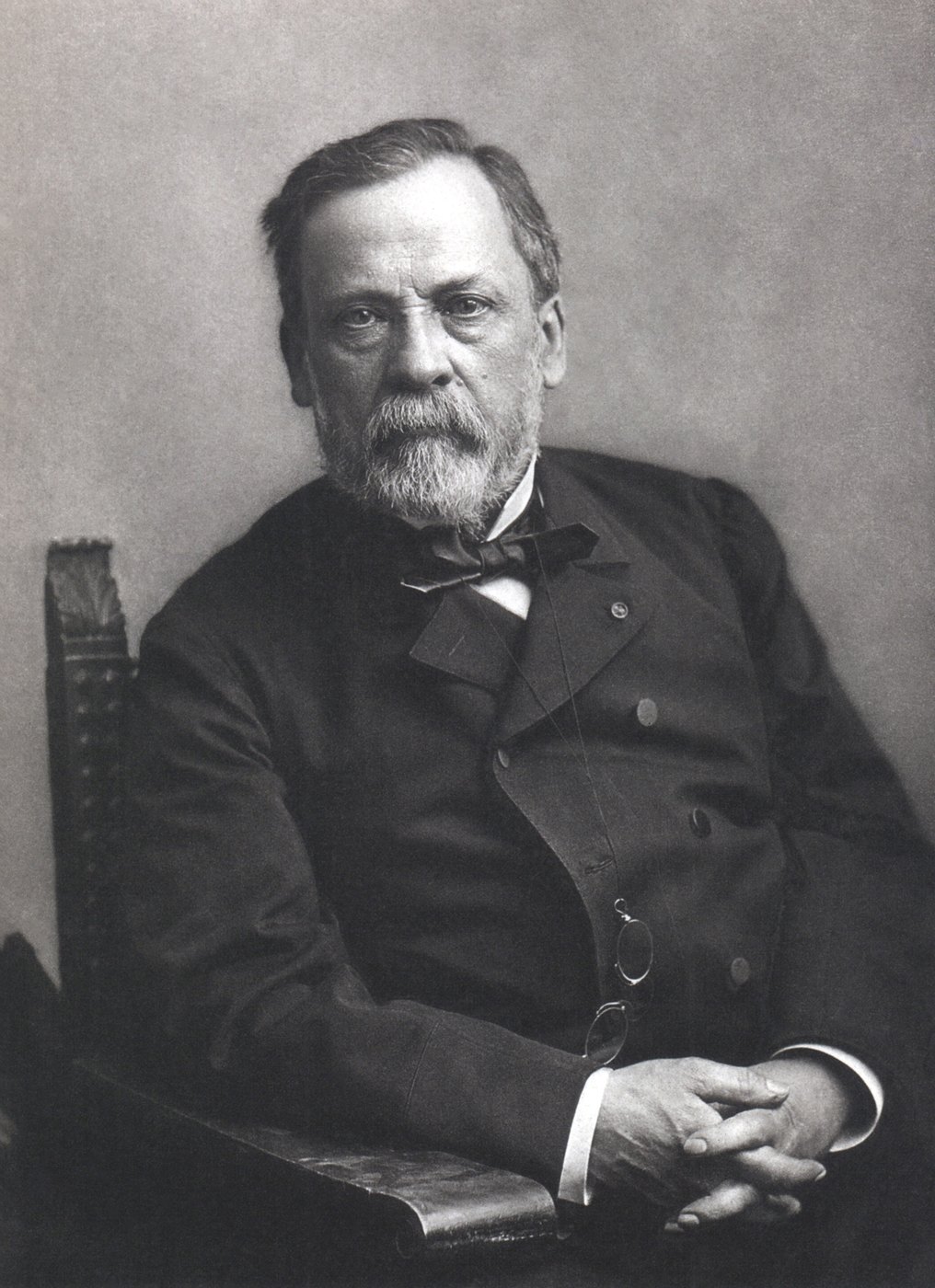
However, experiments carried out by two scientists brought about the downfall of the belief in "spontaneous generation". The first of them was Francesco Redi. In experiments he carried out in 1668, he proved that the maggots appearing on meat did not form by themselves but hatched from eggs laid there by flies. Faced with this situation, the defenders of the idea of "abiogenesis" retreated and claimed that it was not larger creatures such as maggots or frogs, but microbes invisible to the eye, that formed from inanimate matter. The debates continued for some two centuries. Finally, the French biologist Louis Pasteur proved, through a series of experiments, that it is impossible for microbes too to form from inanimate matter. Pasteur explained the result he obtained as follows:
"Can matter organise itself?... No, the information available today shows that even microscopic beings cannot come into the world without living parents similar to themselves."13
Redi and Pasteur had an important characteristic in common: both scientists believed in God's existence and that He created all living things. This belief also played a great part in their realising the absurdity of the idea of "abiogenesis". While scientists influenced by materialist philosophy (evolutionists such as Darwin and Haeckel) insistently defended the idea of "abiogenesis", these scientists, because they approached science from the right foundation, recognised the truth of "biogenesis".
The evolutionists, however, continued to oppose this obvious truth. Their blind attachment to materialist philosophy plunged them into a hopeless struggle that would last a century. Two materialist scientists named Alexander Oparin and J. B. S. Haldane put forward the concept of "chemical evolution". According to Oparin and Haldane, "abiogenesis" does not take place within a short time, but it could become possible over a long period. In fact, this claim, which contradicts certain fundamental laws, first and foremost the Second Law of Thermodynamics, turned into a dead end that would cost the world of science a loss of time.
In this period many scientists tried to carry out experiments that would substantiate the claim of chemical evolution or to support this claim with new theories. Giant laboratories, large institutes and universities were mobilised to support this claim. But all these efforts ended in failure.
Professor Klaus Dose, a well-known evolutionist and head of the Institute of Biochemistry at Johannes Gutenberg University, admits as follows that all the activities aimed at proving that inanimate substances produced life have yielded no result:
"More than 30 years of experimentation on the origin of life in the fields of chemical and molecular evolution have led to a better perception of the immensity of the problem of the origin of life on Earth rather than to its solution. At present all discussions on principal theories and experiments in the field either end in stalemate or in a confession of ignorance."14
If the world of science had not been addicted to the materialist superstition of "abiogenesis", all these aimless efforts carried out under the name of "chemical evolution" could perhaps have been directed towards more useful work. Had the world of science acted in the knowledge that God created life and that our Lord alone possesses the power to give life, the waste of time, money and people could thereby have been prevented. In that case, instead of trying to prove the myths of ancient Greece, science would have turned to new discoveries and research that would benefit humanity.
Today the world of science has shown that inanimate substances cannot, as a result of chance, organise themselves and combine with other inanimate substances to form a flawless, extremely complex cell. In the same way, it is also perfectly clear that the millions of species of living things we see around us could not have formed from cells that combined by chance, as the evolutionists claim. It is evident that a rose, a peacock, a tiger, an ant, in short, no living thing, came into existence by the will of unconscious cells formed by the combination of unconscious atoms.
A scientist carrying out profound research on these subjects is not a being that came about through unconscious atoms making decisions either. There is no doubt that it is impossible for unconscious atoms to produce an extremely conscious human being.
Indeed, it was shown in the Qur'an over a thousand years ago that God created life from "nothing", that it is God Who gives life, and that no being other than Him possesses the power to "give life".
If science had been based on these truths that God has made known to people, it would not have lost so much time "passing the time" with fruitless research by evolutionists over such a long period.
The Loss Brought to Science by Attempts to Prove the Claim of the "Evolution of Species"
There are millions of species of living things on earth, and these species differ from one another in many respects. Horses, birds, snakes, butterflies, fish, cats, bats, earthworms, ants, elephants, mosquitoes, bees, dolphins, starfish, jellyfish, camels... There are great differences among each of these creatures in their physical features, the environments they live in, their hunting methods, defence tactics, feeding habits, reproduction, in short, in every kind of characteristic they possess.
"God created every animal from water (sperm). Some of them go on their bellies, some of them on two legs, and some on four. God creates whatever He wills. God has power over all things."
"In the heavens and the earth there are certainly Signs for the believers. And in your creation and all the creatures He has spread about there are Signs for people with certainty." (Surat al-Jathiya, 3-4).
How, then, did these living things come into being?
Everyone who reflects on this question using his reason will understand that all living things were created flawlessly. Every design points to the existence of the designer who made it. Living things, like all the other examples of design in the universe, prove the existence of God.
Indeed, this truth has been made known to us through the religion of Islam.
In the Qur'an God has revealed to us how living things came into being: our Lord created all species of living things separately. With His matchless design and infinite knowledge, God gave each living thing very different characteristics and made His infinite power, intellect and knowledge known to people. A few of the verses concerning the creation of living things are as follows:
"Among His Signs is the creation of the heavens and the earth and all the creatures He has spread about in them. And He has the power to gather them together whenever He wills."
"God created every animal from water. Some of them go on their bellies, some of them on two legs, and some on four. God creates whatever He wills. God has power over all things."
"He created the heavens without any support you can see, and cast firmly embedded mountains on the earth so that it would not move under you, and scattered about in it creatures of every kind. And We sent down water from the sky and made every generous species grow in it. This is God's creation. Show me then what those besides Him have created! The wrongdoers are clearly misguided."
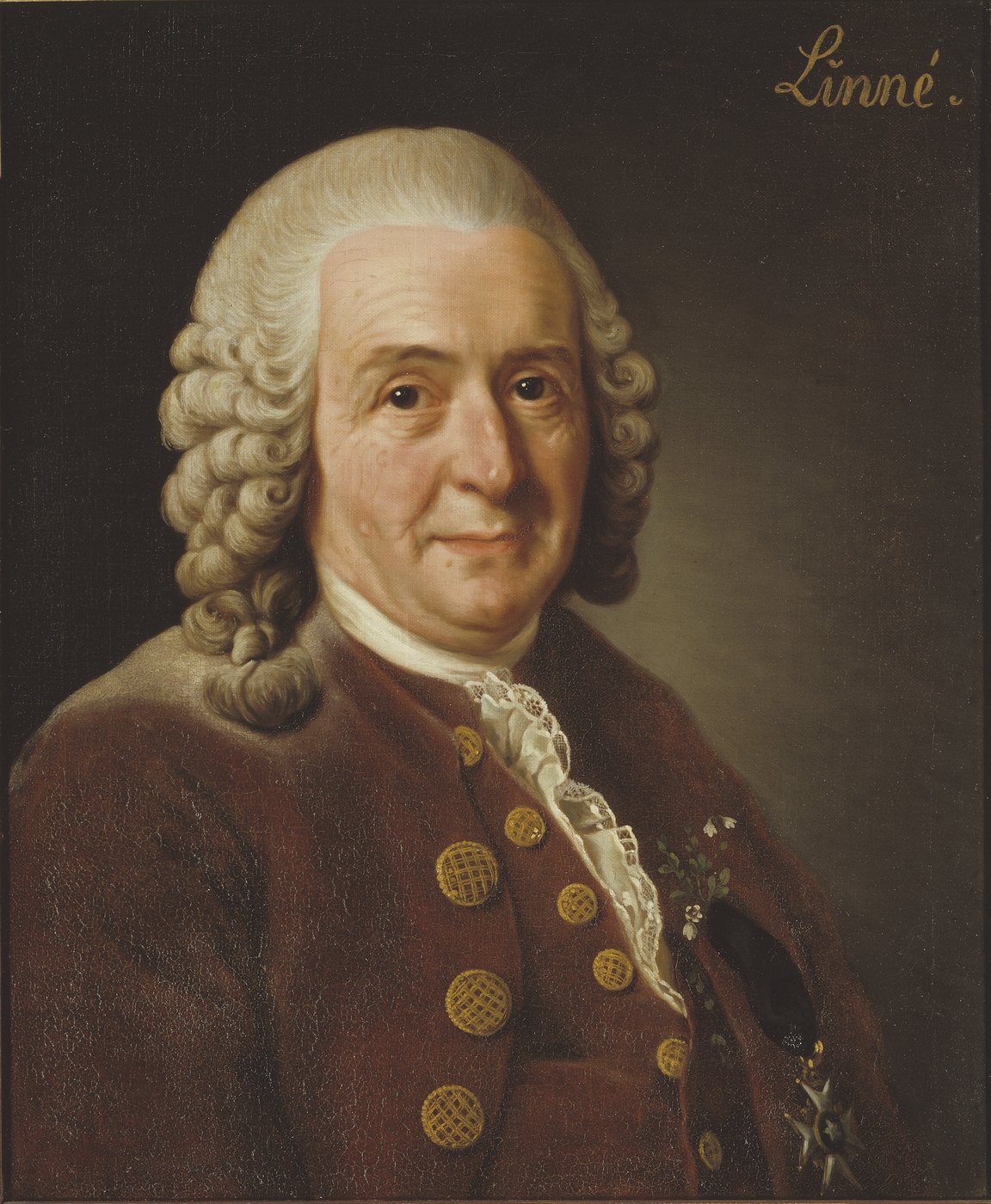
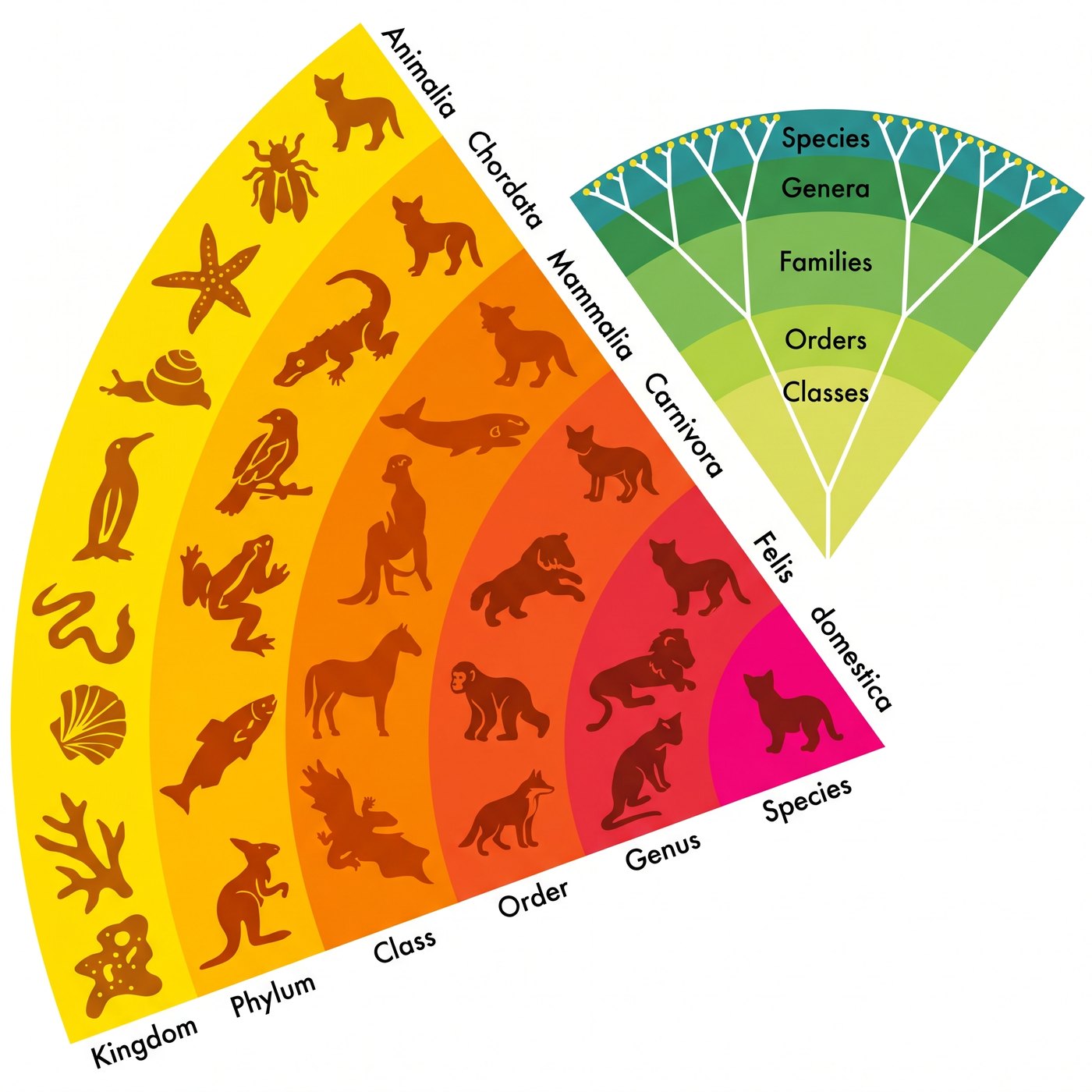
Carl Linnaeus, who believed that all living things were created by God, was the first to study living things by classifying them, and became the founder of that system.
This truth of creation helped scientists in the establishment of such fields of science as biology, anatomy and paleontology. Great scientists such as Carl Linnaeus, who first studied living things by classifying them and is known as "the founder of systematics", Georges Cuvier, the founder of the science of fossils and of comparative anatomy, Gregor Mendel, who laid the foundations of the science of genetics by discovering the laws of heredity, or Louis Agassiz, considered "the greatest biologist of 19th-century America", engaged in science in the knowledge that God created all species of living things.
With the acceptance of the theory of evolution put forward by Charles Darwin, however, the world of science embarked on attempts "to prove that species arose from one another as a result of evolution". This attempt steered scientists towards a great deal of fruitless research. In fossil excavations carried out all over the world, a search began for the fossils of transitional creatures that in reality never existed. Imaginary scenarios were devised about how species arose from one another through evolution. These scenarios found a place in scientific journals and were taught to young people as lessons in schools.
To understand better that the evolutionists have used their science for empty fantasies, it would be best to give a few examples of these scenarios. For example, one evolutionist source tells the following story about the transformation of reptiles into mammals:
Some of the reptiles in the colder regions began to develop a method of keeping their bodies warm... Their scales became increasingly pointed and turned into hair. Another adaptation that took place at this point was the development of sweating, which enabled the creature to cool its body when necessary through the evaporation of water. Then, unexpectedly, some of the young began to lick their mothers' sweat for nourishment. Because of this, certain sweat glands began to secrete more and more sweat, and this secretion eventually turned into milk. Thus the young of these first mammals got a better start in life.15
To prove that this evolutionist claim is true, it became necessary to prove scientifically such "impossible" events as sweat turning into milk and scales into hair, and thousands of scientists once again spent their time on this story. In reality, however, none of these transformations is possible. First of all, mother's milk, which contains everything a baby needs, cannot have come about through the evolution of "sweat" as in the claim above. For mother's milk is a substance specially adapted to the baby's needs and regulated at every stage according to a definite plan. Every kind of substance a baby needs is produced in the mother's milk exactly when it is needed. For example, on the day the baby needs potassium, the mother's milk contains a large amount of potassium. This kind of regulation also applies to all the other substances the baby needs according to its development. It is obvious that such a miraculous nutrient cannot have come about through unconscious chance.
In the same way, the other part of the claim above, the story of "reptile scales turning into mammalian hair as a result of evolution", also contradicts scientific facts. Scales and hairs have entirely different structures:
1- Hairs have a follicular structure, that is, they grow inside a small sac. Scales, on the other hand, are layers within the skin. Moreover, the stages of development, growth and shedding of scales are different from those of hairs; in these respects they are not at all similar to one another.
2- There is no evidence that hairs arose from scales as a result of evolution. Just as there are no fossil remains relating to these claims of the evolutionists, neither is there any logical mechanism they can put forward.
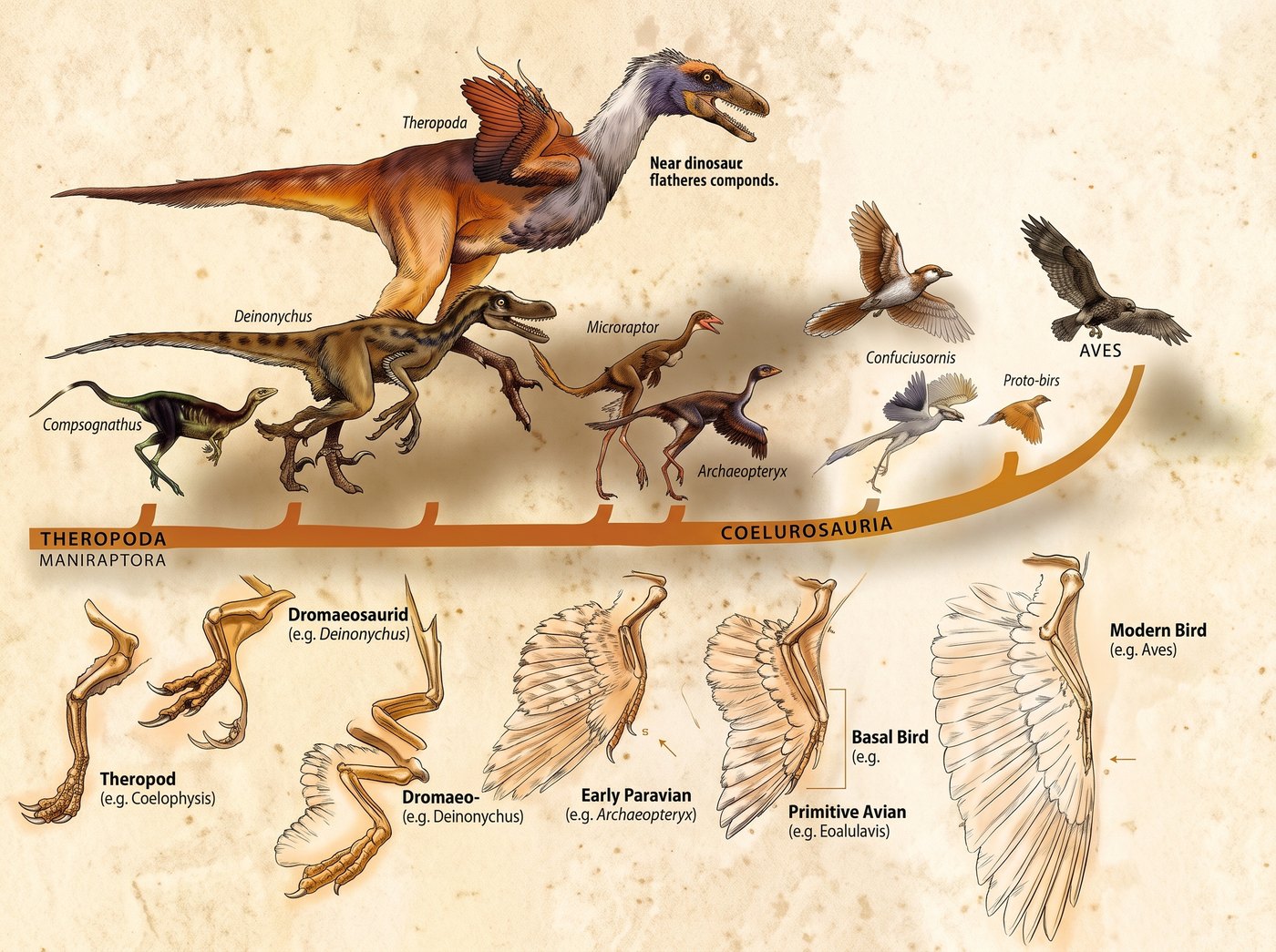
This is not the only unscientific "story" put forward about the imaginary transformation of reptiles into mammals. Every evolutionist has a "story" of his own. In a similar way, many imaginary scenarios have also been constructed about dinosaurs evolving and turning into birds. One of these scenarios tells of dinosaurs beginning to fly while chasing mosquitoes. Another scenario proposes that dinosaurs spread their wings and flew while jumping from tree to tree. The task of "proving" these scenarios, which every evolutionist invents thanks to the power of his imagination, falls to science. To this day many scientists have investigated how dinosaurs could have flown while running or jumping from branch to branch, and have spent years trying to prove how scales turned into bird feathers. The well-known evolutionist and ornithologist Alan Feduccia is one of the evolutionist scientists who spent years on this subject in vain; Feduccia, who devoted 25 years to investigating whether there is a connection between dinosaurs and birds, made this confession at the end of his work:
"I've studied bird skulls for 25 years and I don't see any similarities whatsoever with dinosaurs. The theory of birds evolving from quadrupeds will be the greatest embarrassment of paleontology of the 20th century."16
Bird feathers have structures entirely different from reptile scales and were created with highly complex features that help birds to fly.
The evolution scenarios do not end there. As the evolutionist paleontologist Dr. Colin Patterson also admits, "There are many hopeless stories about the nature of life, each one more imaginary than the last."17 Evolutionists have also put forward the fantastic idea that marine mammals such as whales and dolphins came about through the evolution of bears that liked going into the sea. In order to find a basis for this scenario, they proposed theories about half-bear, half-whale creatures and wrote stories about "walking whales".
Of course, evolutionists can dream whatever they like and believe whatever scenarios they wish. The point, however, is that they have squandered the resources and time of science in vain in order to "prove" these scenarios. As another well-known evolutionist scientist, Pierre-Paul Grassé, stated concerning evolution scenarios, "there is no law against daydreaming, but science must not indulge in it."18
As long as science is used in hypotheses with faulty foundations such as Darwinism, it will continue to chase after such fairy tales. In fact, if the truth of creation is accepted, all these fruitless efforts that block the way of science will disappear. As we stated at the beginning, God created each species of living thing separately. The physical features, feeding habits, hunting methods, defence tactics, ways of raising their young and so on of each of them are in flawless harmony with one another. To propose that this harmony came about by chance and then to try to prove it is utterly misplaced. For this flawlessness cannot come about by chance; it can come about only through the power and control of our Lord, the supreme Creator. Consequently, instead of constructing stories that are products of the imagination, investigating the systems that exist and bringing to light the features in these systems will make very great contributions to science. Most important of all, research in this direction helps us to know better God, the Possessor of supreme power, Who created man and the entire universe from nothing.
The Problem of Mutation
Another of the theory of evolution's claims that takes up the time of science is the hopeless research carried out for "beneficial mutations". Neo-Darwinism puts forward two concepts as the "mechanism of evolution", and one of them is mutations. For this reason, from the point of view of the theory of evolution, it is essential to prove that mutations will produce a beneficial effect on living things. Contrary to the evolutionists' claims, however, mutations are always harmful, and no effect of an evolutionary character has ever been observed.
Evolutionists claim that the forelimbs of dinosaurs chasing flies turned into wings; they do not shrink from putting forward such imaginary, even laughable, theories.
Evolutionists, however, have insistently produced examples of artificial mutation and engaged in a struggle lasting decades in order to observe beneficial mutations. For example, a great many mutation experiments were carried out on fruit flies, always in the hope that a "mutation that improves genetic information" would occur. The result, however, was a complete failure. The evolutionist scientist Michael Pitman says the following about such mutation experiments, which went on for years and yielded no result:
"Countless geneticists have subjected fruit flies to innumerable mutations over generations. Did an artificial evolution emerge as a result? Unfortunately not. Only a very small fraction of the geneticists' creatures could survive outside the bottles in which they were fed. In practice, all the mutated flies either died, were left crippled or were sterile."20
The well-known evolutionist Gordon Taylor expresses as follows the fact that 50 years were lost on mutation experiments:
"For fifty years thousands of experiments were carried out on flies, but the emergence of a new species was never observed. Not even a single new enzyme came into being."21
When we look at the evolutionists' claims on other scientific subjects, the situation does not change. Evolutionists defend Darwinism in spite of all kinds of scientific discoveries, and even try to conceal this by dressing it up as "scientific patience". In reality, what they display is not scientific patience but obstinacy against science.
The Problem of Fossils
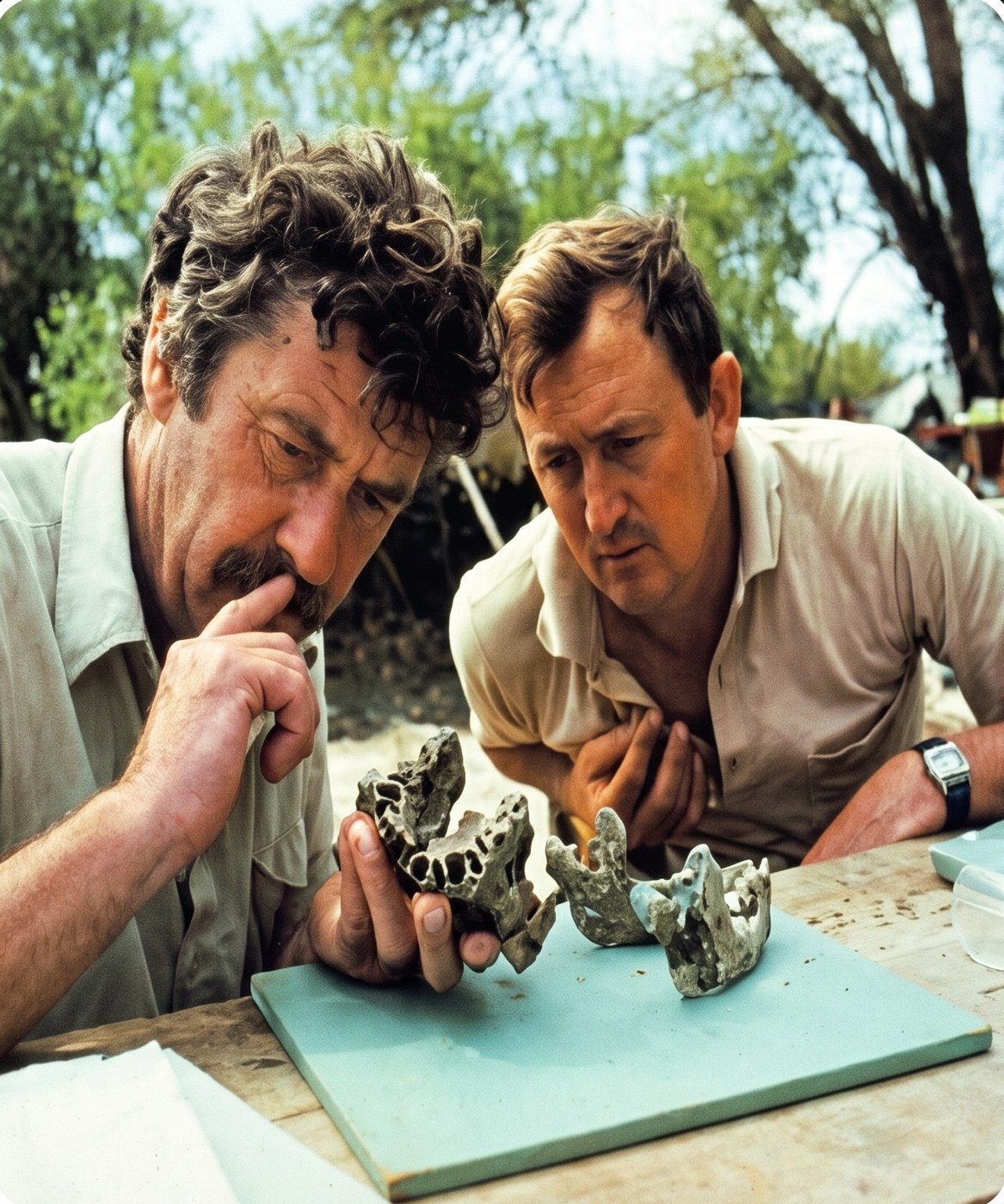
Another reason for the loss of time that the theory of evolution has brought upon science is that paleontology (the science that studies fossils) has been driven into a dead end in trying to prove this theory. Of course, paleontological research is needed in order to learn the history of life on earth. However, the mistaken views of the theory of evolution have a negative effect on fossil research and steer scientists in the wrong direction. In particular, some of the paleontologists investigating the subject of "man's ancestors" have ended up in a complete dead end. All the research they have carried out to find imaginary half-ape, half-human creatures has proved fruitless.
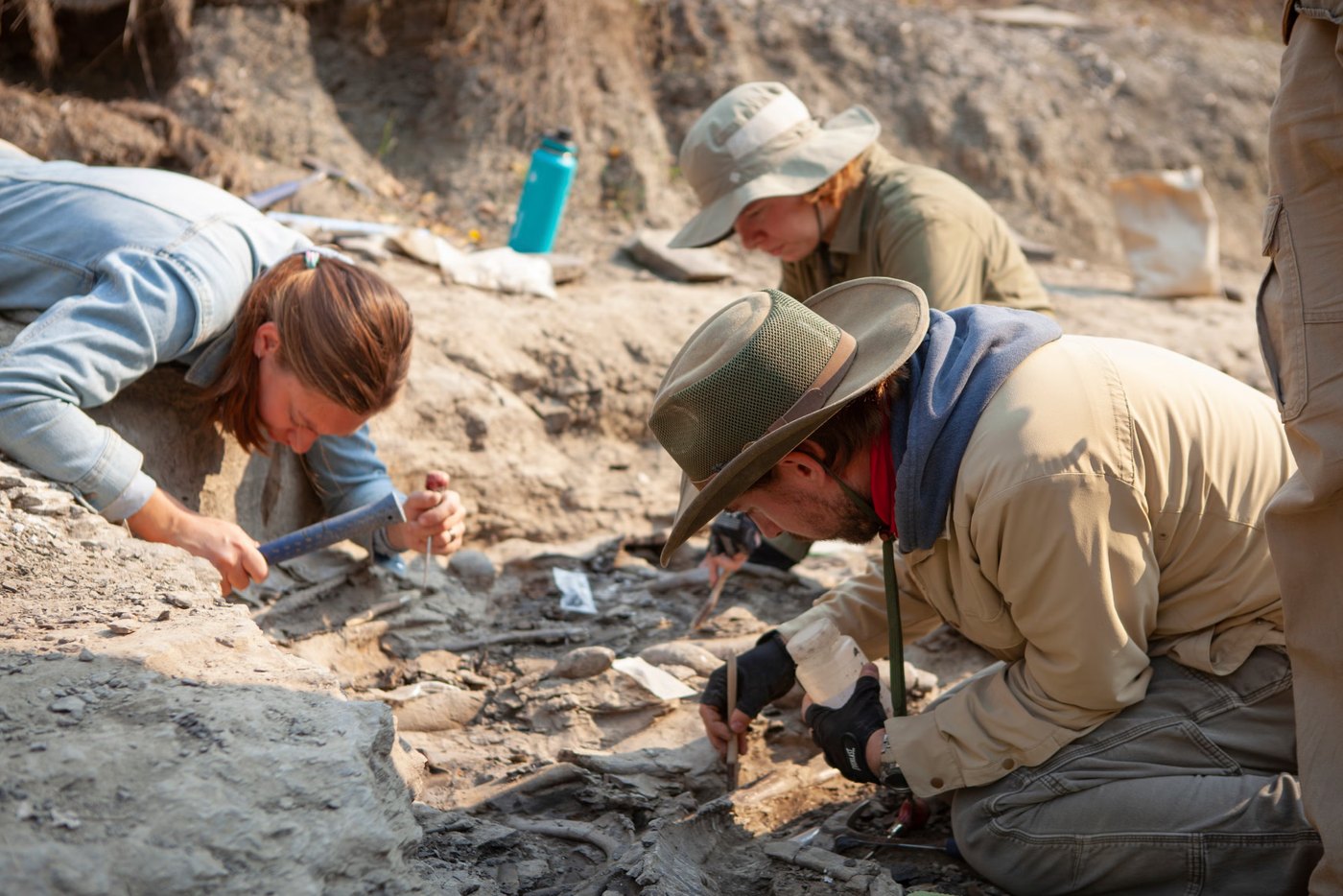
It must also be stated that fossil research is carried out under very difficult conditions and requires great financial resources. Activities carried out mainly in regions such as the deserts of Africa, with camps set up so that research teams of dozens of people can live there for months, and conducted under these difficult conditions, beneath the scorching sun, with financial support amounting to billions of dollars, have yielded no result for the past century and a half.
The well-known evolutionist fossil researcher Richard Leakey and the well-known researcher Roger Lewin have made the following confession about these fruitless studies:
Unfortunately, the path of human evolution gives us very few and faint clues: stone tools, fragments of skulls, a piece of a leg bone, half a jawbone, rarely a whole skull and, of course, a great many teeth... These are what we have been able to find in the sediments, now deeply buried, where our ancestors once lived... If someone were to try, for example, to gather into one room all the fossil remains found so far of our ancestors who lived between five and one million years ago, just a few large tables would be enough to display them all. Worse still, a not very large shoe box would be enough to hold the fossil finds belonging to hominids that lived between 15 and 6 million years ago.22
All this is a waste of time, information, labour, money and resources used under the name of "science". All over the world, thousands of universities, scientific bodies and organisations, millions of scientists, teachers and students, laboratories, technical staff and technical equipment, and endless other resources besides have been mobilised for the sake of proving a claim that is divorced from the truth. Yet no result emerges, and the new finds that are obtained show ever more clearly that the claim of evolution is wrong.
The evolutionist scientist S. J. Jones, in an article he wrote in the journal Nature, explains as follows the dead end into which paleoanthropology, that is, fossil research concerning man's ancestors, has fallen:
"Paleoanthropologists nervously try to conceal the scarcity of fossils. Paleoanthropology must still be the only field of science that one can be known in merely by putting forward an opinion. In paleoanthropology, the acceptance of an idea depends on who shouts loudest."23
The Losses "Brought" to Science by Those Who Deny "the Flawless Order in Nature"
Refusing to accept the truth of creation in nature, in other words, the "order" in nature, in fact blocks scientific research. For a scientist who knows that there is an order in nature begins his work with the thought of investigating this order and its purpose. An evolutionist, however, because he sees the whole of nature as a purposeless heap of matter, will not serve the same purpose.
The American mathematician and philosopher William Dembski is one of the scientists who maintain that there is "order" in nature. Dembski explains that the evolutionist view, by seeing no purpose in nature, holds back scientific progress. As an example of this, he cites the concept of "junk DNA" that evolutionists have put forward concerning DNA ("junk DNA", according to the supposition of evolutionist scientists, consists of portions of DNA that contain no genetic information and, consequently, have no function). Dembski says:
"Design is not a science stopper. Indeed, design can foster inquiry where traditional evolutionary approaches obstruct it. Consider the term 'junk DNA'. Implicit in this term is the view that because the genome of an organism has been cobbled together through a long, undirected evolutionary process, the genome is a patchwork of which only limited portions are essential to the organism. Thus on an evolutionary view we expect a lot of useless DNA. If, on the other hand, organisms are designed, we expect DNA, as much as possible, to exhibit function. And indeed, the most recent findings suggest that designating DNA as 'junk' merely cloaks our current lack of knowledge about function. For instance, in a recent issue of the Journal of Theoretical Biology, John Bodnar describes how 'non-coding DNA in eukaryotic genomes encodes a language which programs organismal growth and development.' Design encourages scientists to look for function where evolution discourages it... Design not only expands scientific inquiry... All the tools of understanding used for scientific progress until now will continue to be used. But design gives a scientist a new tool of understanding. It brings new subjects of research to light. For when we know that something has been designed, we also want to find out how it was produced and what its purpose is."24
As can be seen, the realisation that living things were created by God both opens new horizons before science and ensures that nature is understood more correctly.
Materialist scientists, however, because they deny God's creation, claim that every living thing in nature came about as a result of chance. According to them, in a universe that came about by chance it is entirely natural for there to be "faulty or unnecessary substances" or "faulty ordering".
As a result of this mistaken way of thinking, a great deal of scientific evidence has been misinterpreted up to the present day, and for many years many truths were not brought to light. For example, a materialist scientist examining a bird feather he finds in nature, on looking at the asymmetric structure of the feather, will think that this structure is disordered "because it came about by chance", and will not consider it necessary to investigate the asymmetric structure of the feather.
For a scientist who believes that God created every being with a purpose and a flawless order, however, the asymmetric structure of the feather is a feature that absolutely must be investigated. A scientist who proceeds in this direction will see within a very short time that the asymmetric structure of birds' feathers is essential for birds to fly, and that birds with a symmetrical feather structure cannot fly.
Similar examples are frequently encountered in the world of science. For example, a similar situation occurred among scientists studying honeybees. Some scientists who calculated at what angle bees join their combs calculated that the two angle measurements the bees use deviate by 0.02 of a degree from the measurements in the most perfect proportion (in the measurements carried out it was determined that the bees build these angles at 109.28 and 70.32 degrees respectively. With very precise calculations, the mathematician König calculated that the most suitable angles serving this purpose ought to be 109.26 and 70.34.)
The scientists concerned came to the conclusion that the bees had made a small error in calculation; the Scottish mathematician Colin Maclaurin (1698-1746), however, was not satisfied with these explanations and repeated the experiment, and the result he obtained was this: owing to a small error in a table of logarithms, König and his team had made a faulty calculation that produced a difference of 0.02 of a degree.25 Thus it emerged that it was the bees that had calculated the most perfect angle correctly, and the scientists who had calculated it wrongly!
A person who knows that God created all living things flawlessly will never think that there is an error in any feature he encounters in nature. He will know that God created every feature he sees for a purpose.
Another example of the error encountered by scientists who do not believe in God's flawless creation again concerns bees: an article by Ben Christol in the 12 October 1996 issue of the journal New Scientist stated that honeybees sometimes beat their wings more than necessary while flying, and that their flight was consequently inefficient. According to the claim in this article, bees sometimes beat their wings at lower and sometimes at higher rates, yet nevertheless fly at the same speed, and consequently, when they beat their wings a great deal, they waste energy needlessly. In the writer's opinion, this was a flaw in design.
However, a research team led by Jon Harrison of Arizona State University, in the course of their research, discovered extremely important reasons for the difference in the wingbeat frequency of honeybees. They published their results in the journal Science (1996, vol. 274, p. 88). These researchers measured the bees' body temperature, wingbeat rate and metabolic rate while changing the ambient temperature. As the temperature rose from 20 degrees to 40 degrees, the wingbeat frequency decreased. The research revealed that bees beat their wings less frequently on hot days and more frequently in cold weather. Nevertheless, no change was observed in their flight speed. In cold weather, with the extra energy they produced by beating their wings more often, they warmed their bodies and their hives. As a result, it emerged that bees' wings serve two separate functions: flying and keeping warm.
A believing scientist studying bird feathers directs his research in the knowledge that every feature of the feathers serves a definite purpose of creation.Bees have such forms of cooperative behaviour that scientists have begun to discover the behaviour of these creatures only in modern times.
One of the subjects on which evolutionist scientists, who do not believe that God created living things separately, complete and flawless as they are today, have been mistaken is the nonsense of "vestigial organs". According to the evolutionists, who maintain that all living things descended by chance from ancestors in the past, there are "organs that perform no function" in the human body, left over from our ancestors but atrophied over time through disuse. Scientists who do not believe in God's creation have harmed science on the subject of organs that they think have no function too. For as science has advanced, it has become clear that these organs, which they considered functionless, are in fact extremely important for the body. One example of how wrong this negative view, which holds back the progress of science, is the fact that the long list of "vestigial organs" drawn up by evolutionists has grown steadily shorter. The evolutionist S. R. Scadding expresses this fact as follows in his article "Do 'Vestigial Organs' Provide Evidence for Evolution?" in the journal Evolutionary Theory:
"As our knowledge (of biology) has increased, the list of vestigial structures has grown ever shorter... Since it is not possible for an organ to be functionless, and since the vestigial organ argument is not scientific in character anyway, I conclude that 'vestigial organs' provide no evidence for the theory of evolution."26
The list of vestigial human organs was put forward in 1895 by the German anatomist R. Wiedersheim and included about 100 organs, such as the appendix and the coccyx. As science advanced, however, the number of organs on Wiedersheim's list steadily decreased, and it was learned that these organs in fact have very important functions. For example, it was established that the appendix, which was considered a vestigial organ, is in fact part of the lymphatic system, which fights the microbes that enter the body. It was discovered that the tonsils, which were on the same list, play an important part in protecting the throat from infections. Important functions were identified for many other organs that had been supposed useless: the coccyx at the end of the spinal column supports the bones around the pelvis and is the anchoring point for certain small muscles; the thymus gland activates the body's defence system by setting T cells in motion; the pineal gland secretes necessary hormones. The crescent-shaped fold in the eye, which Darwin cited as a vestigial organ, was found to ensure the cleaning and moistening of the eye.
All these examples show us one truth: in order to obtain correct and rapid results in science, the starting point must be correct. God created all beings for a purpose, with a flawless and complete order. Consequently, the aim of a scientist studying nature should be to bring to light the features of this flawlessness in all beings and to investigate the wisdom behind every feature he encounters.
The Negative Effect on Evolutionist and Atheist Scientists of Realising That They Have "Striven in Vain"
In fact, carrying out research and studies for the sake of a claim that is far from the truth and yields no result is extremely wearing for evolutionist scientists too. There is no doubt that they fall into great despair when they realise that most of the research to which they have devoted their lives has been fruitless and of no benefit. For carrying out scientific research demands great self-sacrifice and discipline. Carrying out experiments or observations in a laboratory for years on a subject in which one knows one will obtain no result, and in the end obtaining findings that are the exact opposite of the claim one wanted to prove, naturally has an extremely negative effect on these scientists.
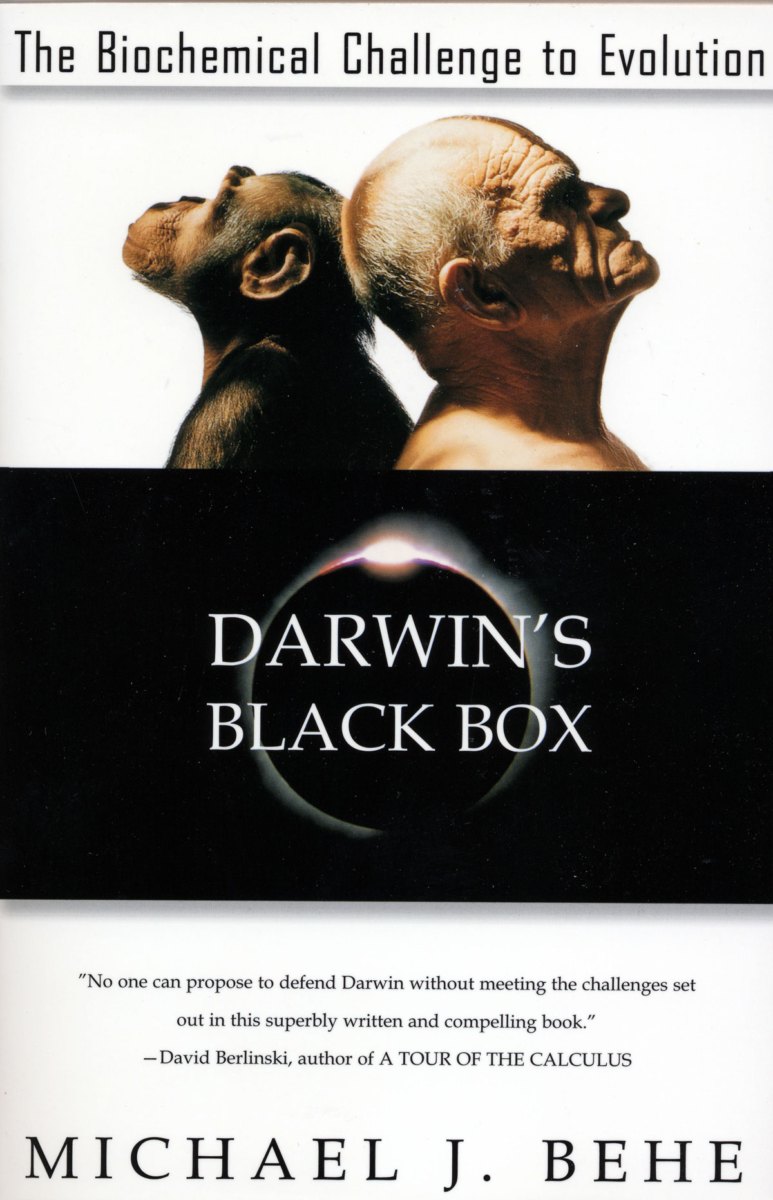
The American biochemist Michael Behe, in his book Darwin's Black Box: The Biochemical Challenge to Evolution, which deals with the scientific groundlessness of Darwinism, describes as follows the psychology experienced by evolutionist scientists in the face of the truth of "design" that has emerged in the living cell:
"Over the past four decades modern biochemistry has uncovered an important part of the secrets of the cell. The labour expended on this has been truly enormous. Tens of thousands of people have dedicated their lives to long work in laboratories in order to discover these secrets... The result of all these efforts to investigate the cell is a loud, clear, piercing cry of a single conclusion: 'design!' The result is so unambiguous that it must be ranked as one of the most important discoveries in the history of science... This triumph should have led tens of thousands of people to celebrate this great discovery with cries of 'Eureka!'..."
But there was no celebration; no joy was expressed. Instead, an embarrassed silence prevailed in the face of the great complexity discovered in the cell. When the subject is raised in public, many scientists begin to grow uneasy; in private conversations they are a little more relaxed: most of them admit the obvious truth they have discovered, but then stare at the ground, shake their heads and behave as if nothing had happened. But why? Why does the world of science not embrace the great truth it has discovered? Why is the evident design that has emerged handled at arm's length with intellectual gloves? Because accepting a conscious design inevitably compels them to accept the existence of God. Some evolutionists admit this depression that the world of science is going through. The evolutionist paleontologist Dr. Colin Patterson, one of the senior figures at the Natural History Museum in Britain and author of the book Evolution, uttered the following historic words in his famous speech at the American Museum of Natural History in New York:
"The question is: can you tell me anything you know about evolution, any one thing that is true? I tried that question on the geology staff at our Natural History Museum and the only answer I got was silence... Later I realised that all my life I had been duped into believing that evolution was an evident truth."28
Most of the research carried out for years by evolutionist scientists has come to nothing. This is a result that destroys the enthusiasm of many scientists for research.
Patterson continued his speech as follows:
"One of the reasons I started taking this anti-evolutionary view is the effect of having worked on this stuff for twenty years and finding that there was not one thing I knew about it. That's quite a shock, to learn that one can be misled for so long."29 The famous evolutionist botanist N. Heribert Nilsson, one of the professors of Lund University, admits that he wasted more than 40 years in vain, saying "my attempts to demonstrate evolution by an experiment carried on for more than 40 years have completely failed"30. The examples cited from these people truly show what science has lost by chasing after a theory divorced from the truth. For decades the knowledge, time, energy, labour, laboratories, assistants and financial resources of thousands of scientists have been squandered for the sake of an empty myth called evolution.
Even more interesting is the fact that it is not only the evolutionists of our time; even Charles Darwin, the leader of the theory of evolution, was frequently troubled that he was "spending his time in vain" and that in the end "his hopes would be dashed".
Darwin frequently voiced his concern about this in the letters he wrote to his friends or in his articles.
For example, he admitted that he could not find evidence in nature that would prove his theory, as follows:
"Nature is indeed utterly obstinate and will not do what I want."31
Another sentence in which Darwin admitted his lack of confidence is this:
"I doubt whether the time I spent on these studies (the studies he carried out for The Origin of Species) was worthwhile."32
As can be seen, this theory, which does not accord with the facts and is defended merely for ideological reasons, also brings distress and despair to its defenders. All this is the inevitable result of science being given a wrong direction.
The Losses Brought to Science by Evolutionist Frauds
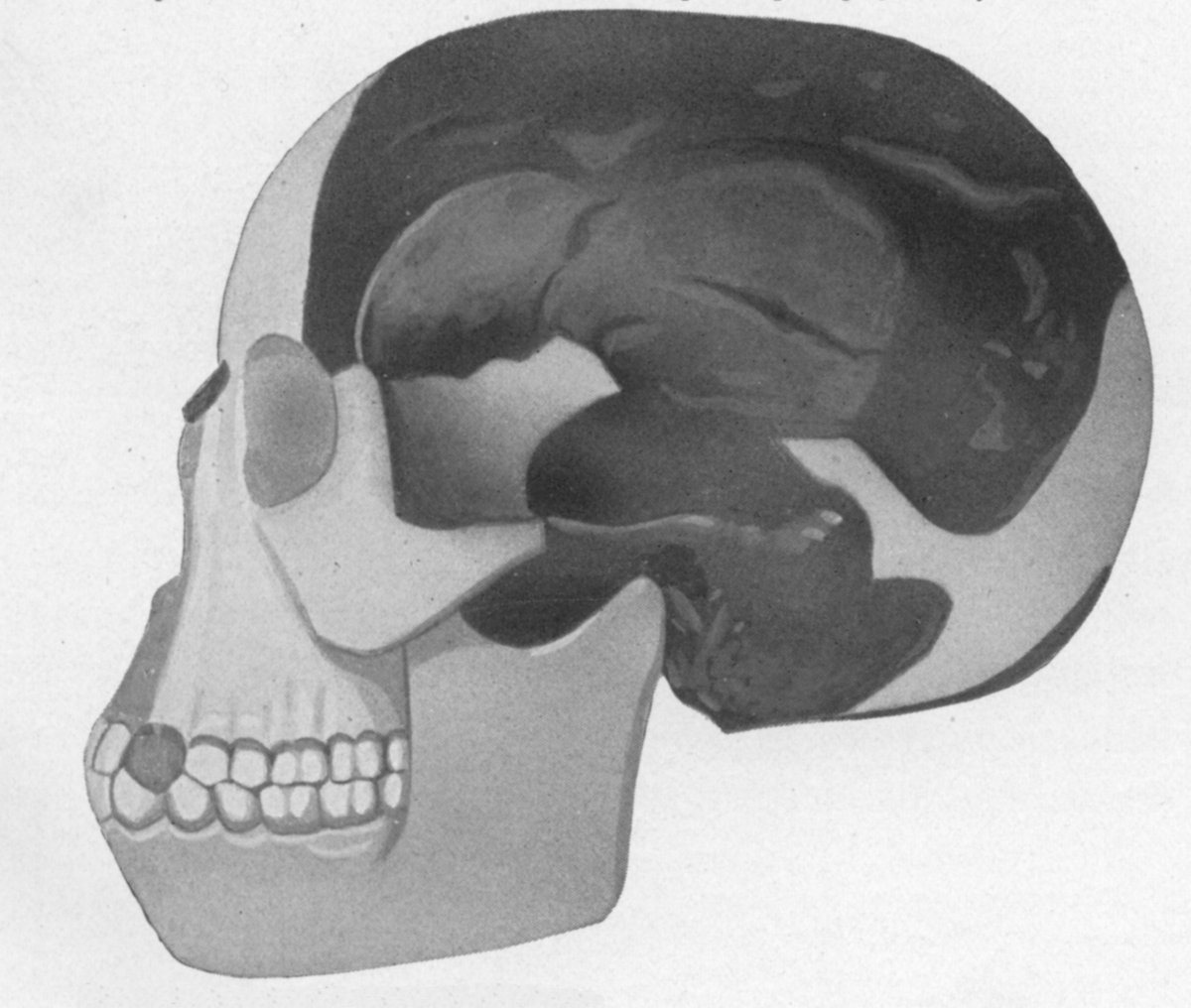
Because evolutionists could not find evidence proving their theory, they have many times deceived humanity by distorting scientific discoveries or committing frauds. The most famous of these frauds is the "Piltdown Man" scandal. Because the evolutionists could not find fossil remains of the "half-ape, half-human" creatures they claimed had lived, they made such a fossil themselves. Attaching an orangutan's jaw to a human skull and giving it an ancient appearance with various chemicals, they displayed this skull for years in the world's most famous museum as "man's ancestor". Although he is an evolutionist, the loss this fraud brought upon science was explained by F. Clark Howell as follows:
"Piltdown Man is nothing but a creature made up of a human skull and an ape's jaw. It was a deliberately staged hoax. They accepted neither that the jaw belonged to an ape nor that the skull belonged to a man. Instead, they declared these parts to be finds from the period between ape and man. Saying it dated back 500,000 years, they gave it a name (Eoanthropus dawsoni, or Dawn Man) and wrote some 500 books on the subject. Paleontologists whiled away forty-five years with this discovery."33
Another evolutionist, Ernst Haeckel, the author of a fraud, both confessed the fraud he had committed and put into words the distortions that his other colleagues committed for the sake of their ideology, as follows:
"After this compromising confession of 'forgery' I should be obliged to consider myself condemned and annihilated. But what consoles me is that side by side with me there are hundreds of fellow culprits, many of the most trusted observers and most esteemed biologists, in whose best biological textbooks, treatises and journals there are as many forgeries, inexact data and more or less doctored, schematised and reconstructed figures as in mine."34
Attempting to make the observations, experiments and research carried out fit evolution, and concealing the truth or presenting it to the public in altered form, has naturally done significant harm to scientific progress. The evolutionist writer W. R. Thompson accepts this truth, albeit indirectly, in the following words:
"This situation, where scientific men rally to the defence of a doctrine that cannot be accepted scientifically, attempting to maintain its credit in the eyes of the public by eliminating difficulties and suppressing criticism, is abnormal and undesirable in science."35
The interesting side of the matter is that, as a result of the research and experiments they carry out to prove evolution, evolutionists constantly find evidence that supports the truth of creation.
Even Though Evolutionists Do Not Want It, Scientific Discoveries Constantly Confirm the Truth of Creation
As stated at the beginning of this section, when science is directed by false ideologies, there is a loss of time, money and labour. Since the 18th century science has remained largely under the dominion of materialists, almost all activity has been directed towards proving materialist philosophy scientifically, and scientific evidence refuting materialist philosophy has been presented to the public in distorted form.
The striking result, however, is that, as a result of the research and experiments they have carried out to prove evolution, evolutionists have constantly found evidence confirming creation. For those who believe in God's existence, science is very easy and effortless. For investigating a system that exists and looking for evidence concerning it poses no difficulty for scientists. But looking for evidence that does not exist is, in the evolutionists' own words, "tedious" and "a headache".
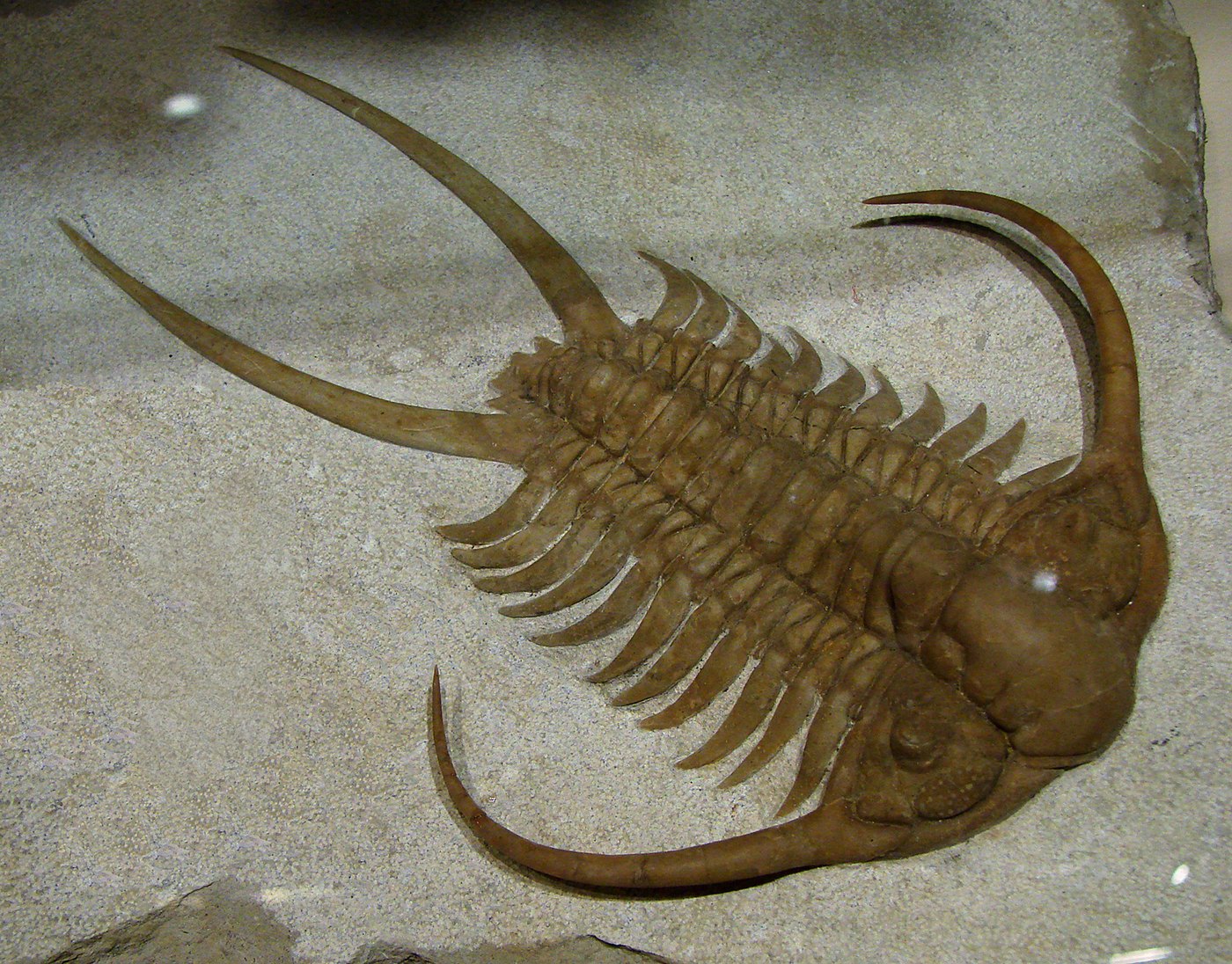
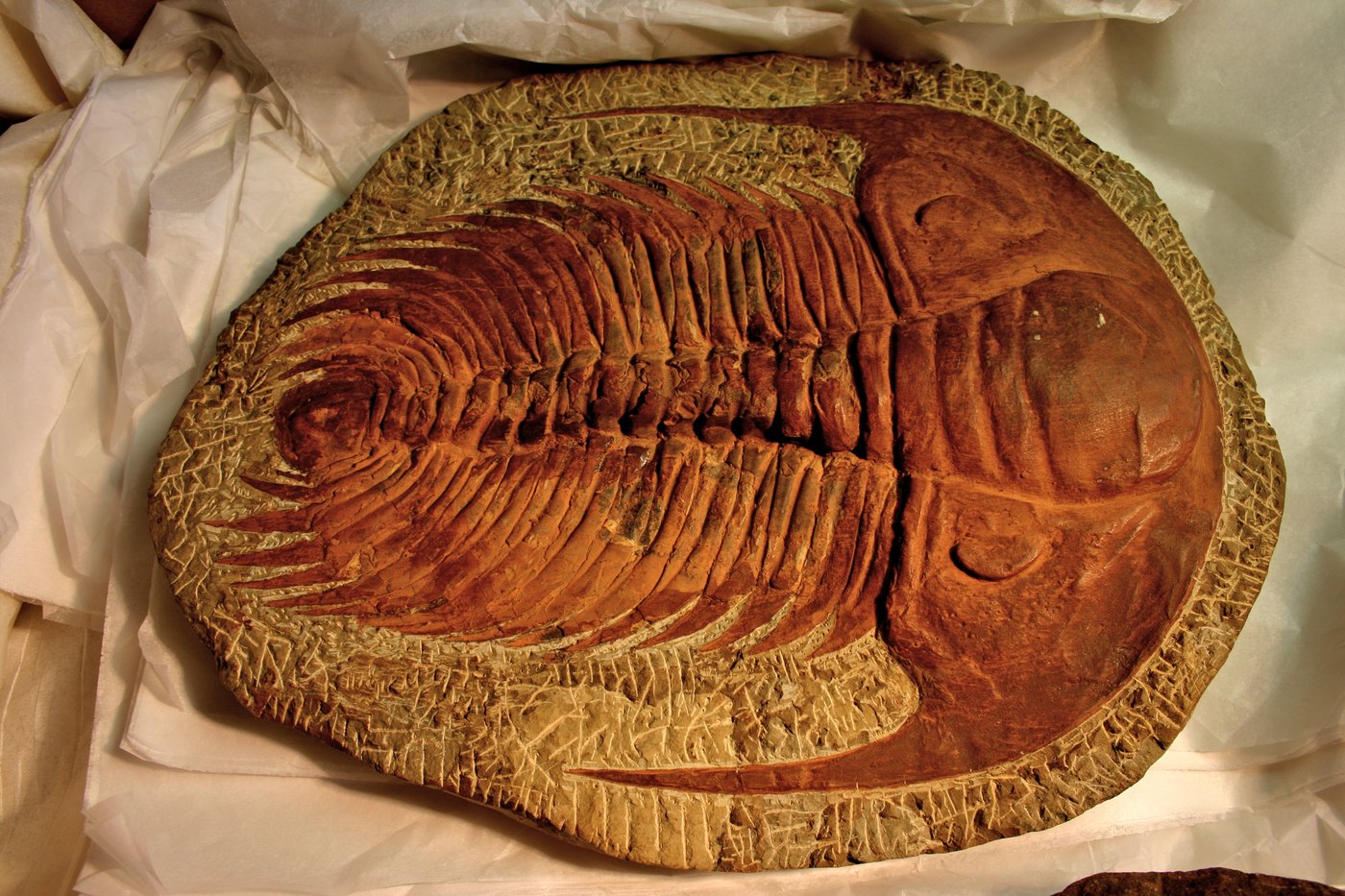
One of the clearest examples of this situation is the paleontological finds belonging to the Cambrian period. The Cambrian period is the name given to the period about 550 million years ago in which the first traces of life are encountered. Every one of the creatures that existed in this period was a perfect creature possessing extremely perfect systems. For example, an extinct species called the trilobite has a highly complex, compound eye structure; this eye structure, made up of lenses, is the same as the eye of certain insects living today, such as the dragonfly. What is a "headache" in the evolutionists' view is the sudden appearance in these strata, without any ancestor, of creatures with these complex structures. These scientific finds clearly point to Creation.
The fossil of the trilobite that appeared in the Cambrian period, and the features of the compound eye it possesses, are among the evidences of its creation.
The well-known evolutionist scientist, the British zoologist Richard Dawkins, says the following about the fact that the finds they have obtained confirm the truth of creation:
"...the Cambrian strata of rocks are the oldest ones in which we find most of the major invertebrate groups. And we find many of them already in an advanced state of evolution, the very first time they appear. It is as though they were just planted there, without any evolutionary history. Needless to say, this appearance of sudden planting has delighted creationists."36
This "fruitlessness" in the field of paleontology is one of the greatest enigmas of evolution. As we said earlier, evolutionist scientists have tried for decades to find transitional forms (the stages of one living thing turning into another) as evidence for evolution. But because such creatures never lived on earth, they have never been able to obtain any result. The evolutionist paleontologist Mark Czarnecki explains as follows the evolutionists' utter failure to find the fossil remains of the transitional forms they are looking for:
"A major problem in proving the theory (of evolution) has always been the fossil record... This record has never revealed traces of Darwin's hypothetical intermediate variants. Species appear suddenly and disappear just as suddenly, and this unexpected situation once again proves the creationist view that supports species having been created by God."37
The eye structure of the dragonfly living in our time also resembles the structure of the fossilised trilobite that has been found.
As some evolutionists also admit, the work that seeks scientific support for evolution comes to nothing and yields no positive results. Indeed, every piece of research connected with evolutionist scientists' claims that everything came about as a result of chance confronts them with a plain truth: the truth that all living things were created flawlessly by God, the Lord of the heavens and the earth...
Conclusion
There is countless evidence of the truth of creation around us and in the universe we live in. The amazing system in a mosquito, the magnificent artistry in a peacock's wings, an organ as complex and perfect as the eye, and millions more beings besides are, for people who believe, evidence of God's existence and of His superior knowledge and intellect. A scientist who accepts the truth of creation and studies nature with this thought will take great delight in every observation he makes and every experiment he carries out, and will draw encouraging strength for new research.
Believing in a superstition such as evolution and trying to defend it without scientific foundations causes scientists psychological distress. The harmony in the universe or the order in living things is a great source of distress for them. Darwin's following words truly describe the state of mind of all evolutionists:
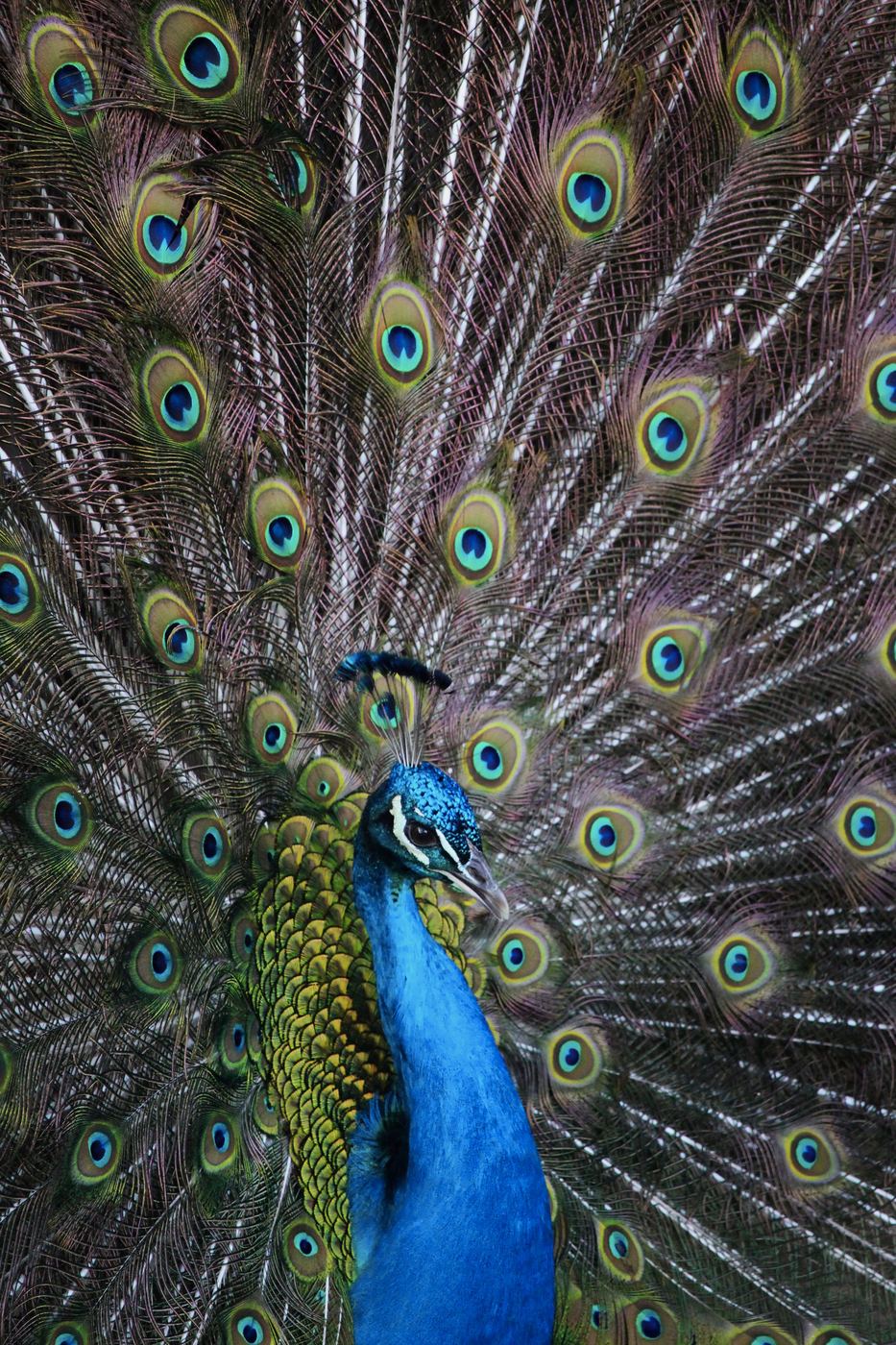
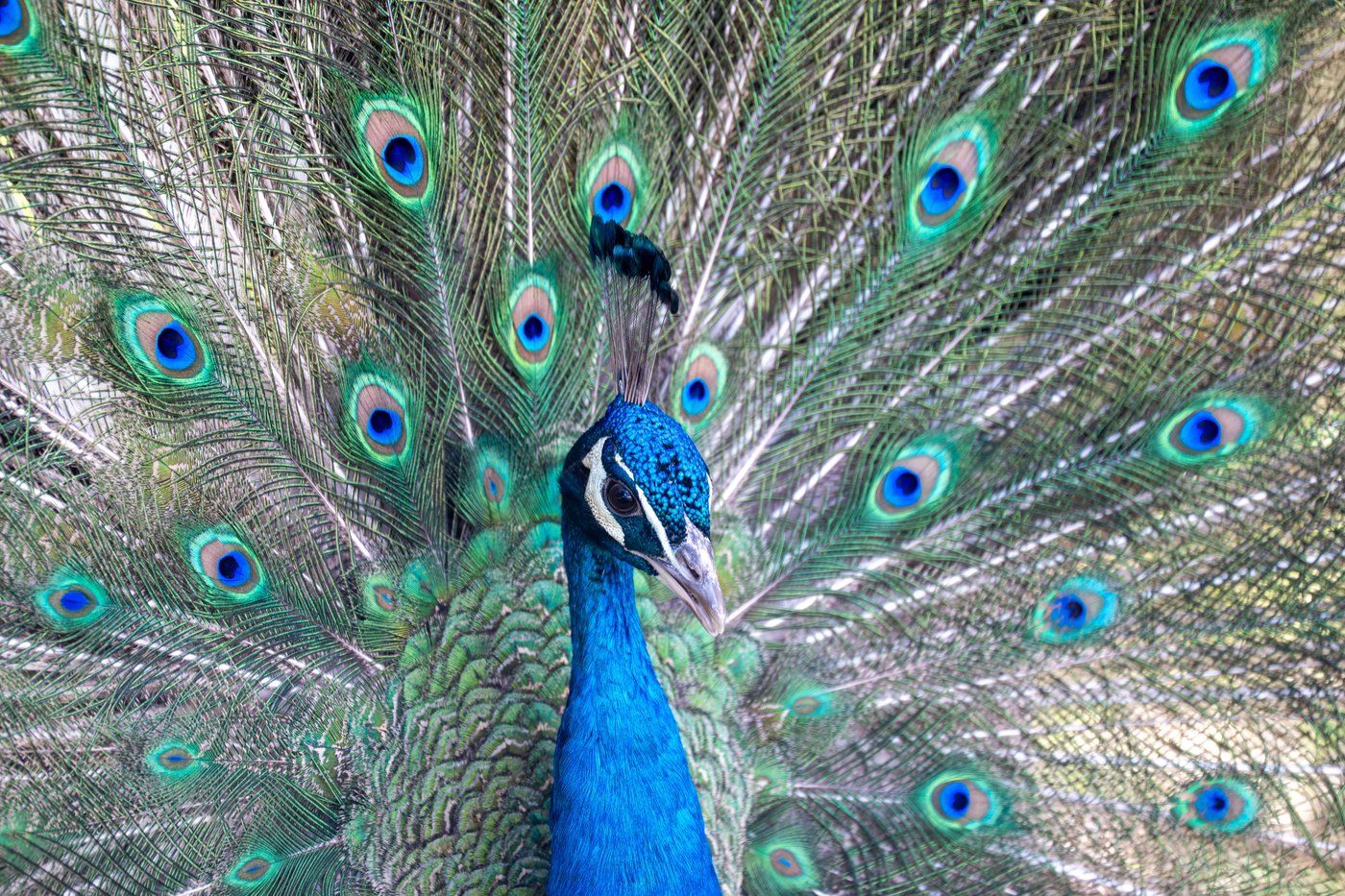
"Thinking about the eye often gave me a cold shudder about my theory. But I have gradually grown accustomed to this problem. Even now, certain trifling structures in nature make me very uncomfortable. For example, the sight of a feather in a peacock's tail almost drives me mad."38
The peacock's feathers, like all the other countless evidences of creation in nature, constantly trouble the evolutionists. In these people, who shut their eyes to the clear evidence they see, there naturally arises an indifference to the truth and, connected with it, a corruption of judgement. The evolutionist Richard Dawkins, who goes so far as to address Christians with the words "even if you see a statue wave its hand to you, do not think you are facing a miracle... it is very improbable, but perhaps all the atoms in the statue's right arm happened, by chance, at one instant to have a tendency to move in the same direction", is a typical example of this corruption of judgement.
For science to be able to develop, these 19th-century relics must be set aside, and there is a need for modern-minded scientists who do not shrink from accepting the truth they see.
The reason why the peacock's feathers "made Darwin sick" is that these feathers clearly show the existence of a supreme Creator.